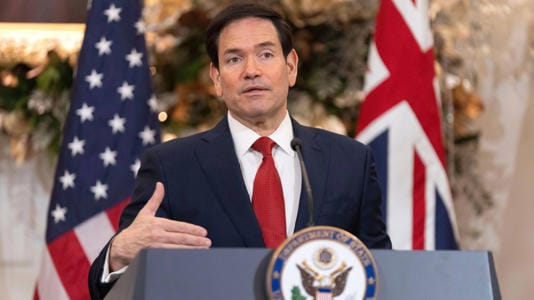

The alliance between Washington and Seoul is facing a digital breaking point. On December 31, the U.S. Department of State issued a stinging rebuke of South Korea’s newly
“Anti-Fake News Act,” labeling the legislation a direct threat to free speech and a “non-tariff barrier” targeting American tech giants. Led by Secretary of State Marco Rubio, the U.S. is sounding the alarm that the revised Information and Communications Network Act—passed by the Democratic Party-led National Assembly—grants regulators an “invasive license for censorship” that could effectively dismantle U.S.-Korea technology cooperation.
The law, modeled after the EU’s controversial Digital Services Act, imposes punitive damages of up to five times the harm caused by “false or manipulated information” and targets “large-scale” platforms based on user count and revenue—a criteria that aligns perfectly with Google, Meta, and X. Sarah Rogers, the U.S. Under Secretary for Public Diplomacy, took to social media to warn that while deepfakes are a legitimate concern, the law’s vague definitions are a Trojan horse for viewpoint-based censorship. With the Trump administration already sanctioning EU officials over similar digital regulations, the message to Seoul is clear: fall in line with a free and open digital environment, or face a full-scale trade dispute in 2026.