

Across remote islands in the Pacific, U.S. military engineers are restoring airfields first built during World War II, as part of broader preparations tied to potential conflict scenarios involving China, according to U.S. defense officials and planning documents.
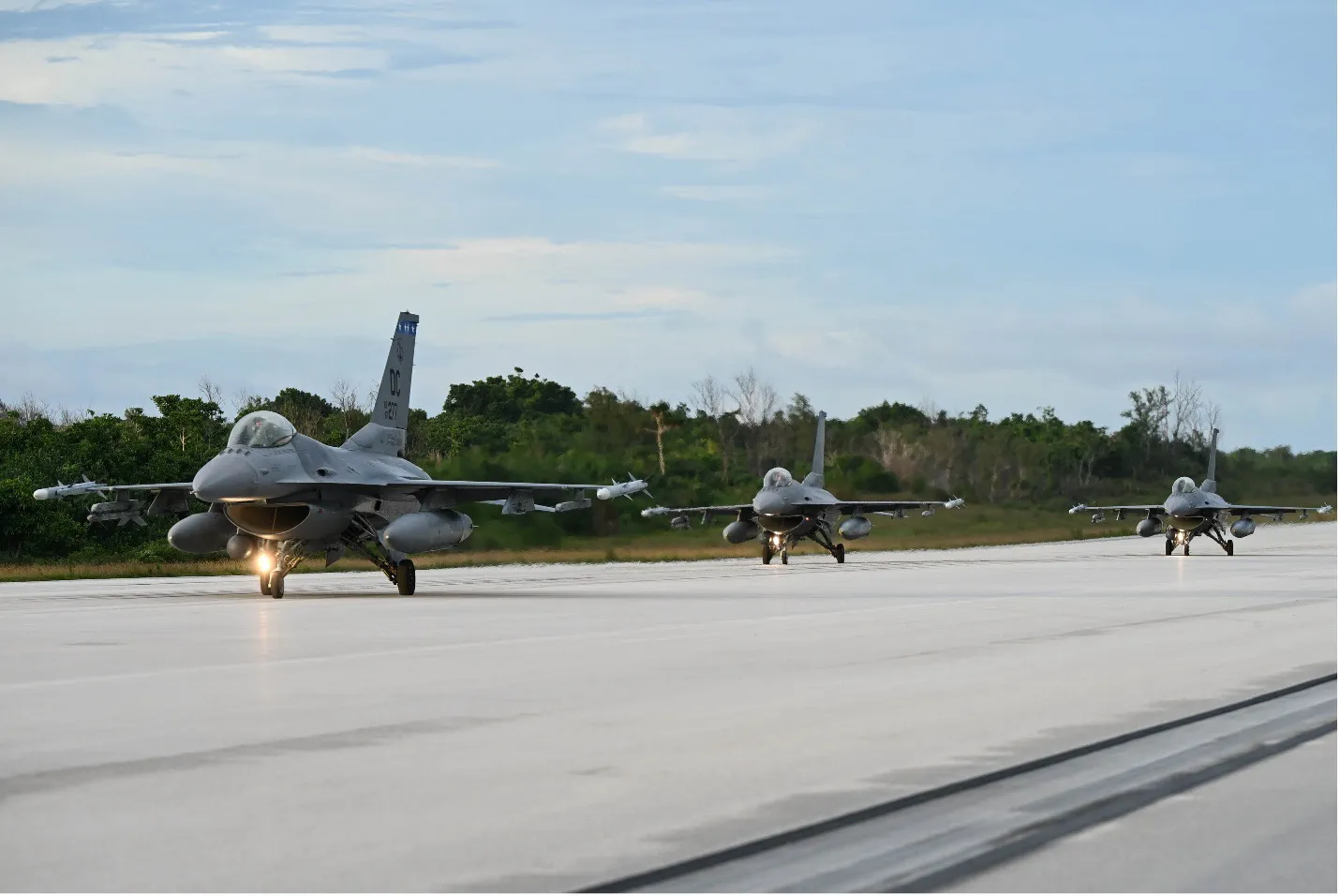
The effort is led by the U.S. Air Force under its Agile Combat Employment (ACE) doctrine, which focuses on dispersing aircraft and operations across multiple locations to reduce vulnerability during a major conflict. Dozens of historic airfields are being rehabilitated to support fighter jets, refueling aircraft, cargo planes, and unmanned systems across the Indo-Pacific.
U.S. officials say the strategy is intended to strengthen operational flexibility and resilience, particularly as China’s long-range missile capabilities expand. Pentagon assessments have warned that established hubs such as Guam and Okinawa could face increased risk in a high-intensity conflict, prompting renewed emphasis on smaller, distributed airfields.
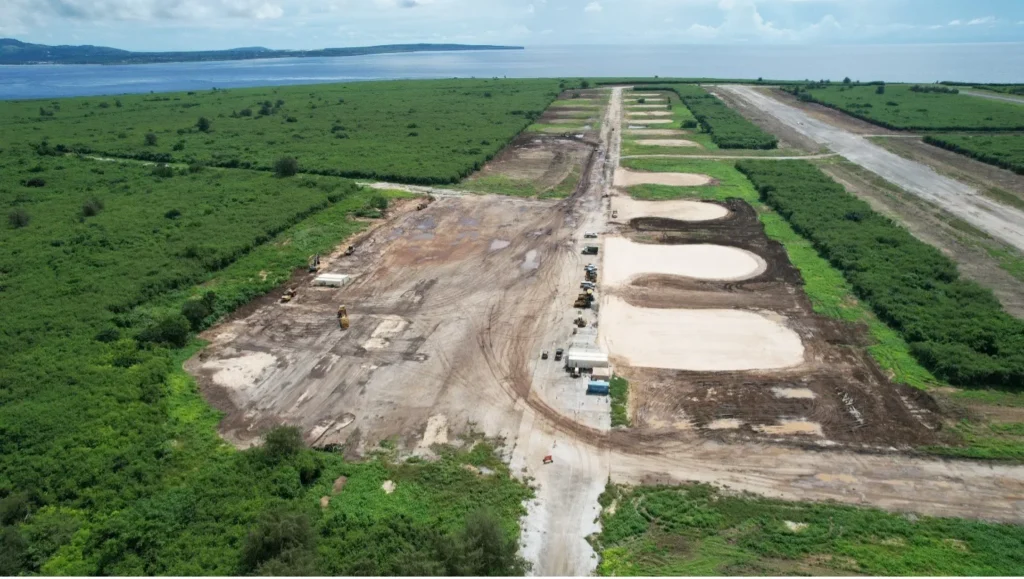
One of the largest projects is the reconstruction of North Field on Tinian Island in the Northern Mariana Islands. Once the world’s busiest airfield during World War II, North Field is being restored to support modern aircraft while retaining its original runway layout. Engineering units from the Air Force, Navy, and Marine Corps have spent several years clearing vegetation, repairing runways, and upgrading infrastructure. U.S. officials expect the airfield to reach operational status by 2027.
Similar work is underway at Northwest Field in Guam, as well as at civilian airports across Micronesia, Palau, the Philippines, and Alaska. These sites are being adapted to serve as diversionary or rotational bases, capable of supporting refueling, maintenance, and rapid repair of battle-damaged aircraft.
Defense planners say expanding the number of usable airfields complicates targeting decisions for any adversary and allows U.S. forces to continue operations even if primary bases are disrupted. The approach also includes prepositioning fuel, munitions, and repair equipment to shorten response times.
China has criticized the expansion, with officials stating that military cooperation in the region should not target third parties and warning against what they describe as destabilizing actions. U.S. officials maintain that the preparations are defensive in nature and aimed at deterrence.
In addition to Pacific island projects, upgrades are ongoing in Alaska, where northern air corridors are being prepared to funnel aircraft into the Pacific theater. Facilities in Japan and Australia are also being expanded to support logistics and rotational deployments.
U.S. lawmakers overseeing defense policy have described the efforts as necessary given current security conditions in the Indo-Pacific. Military officials say the revived airfields are not intended as permanent bases but as contingency and training locations designed to support rotational forces.
The reconstruction program represents one of the most extensive U.S. military infrastructure efforts in the Pacific in decades, reflecting how historical sites are being adapted to meet modern strategic requirements amid rising regional tensions.