

The crypto industry has reached a dangerous tipping point. In early 2026, the traditional Two-Factor Authentication (2FA) methods that once felt bulletproof—SMS codes and even some mobile authenticator apps—are being bypassed by a new generation of AI-driven phishing and SIM-swap attacks. For those holding significant assets, the message from security experts is clear: if your security isn’t physical, it isn’t permanent.
The Death of the SMS Code
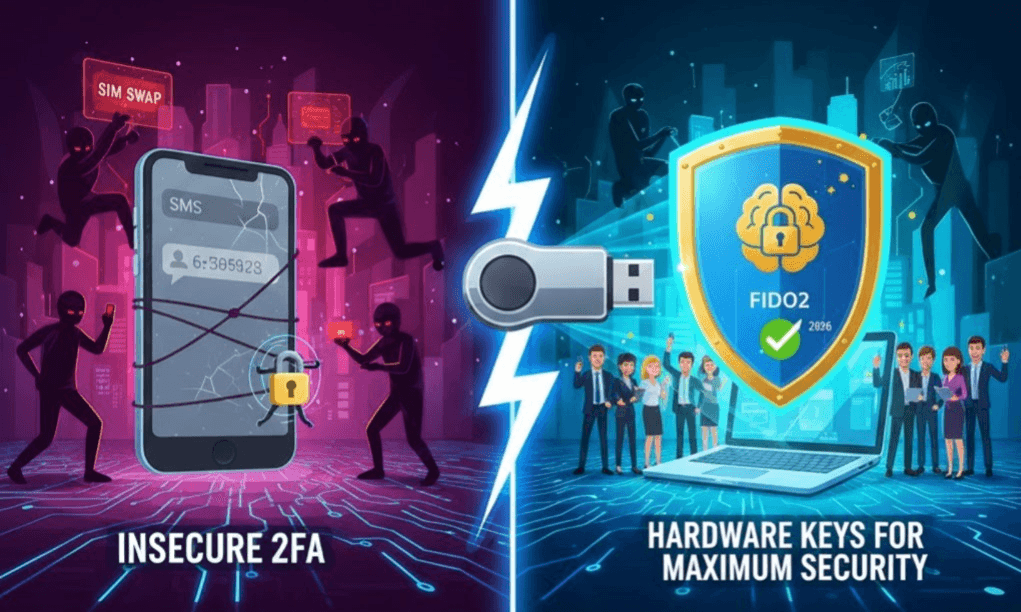
For years, SMS-based 2FA was the standard. Today, it is a liability. “SIM swapping” has evolved into a streamlined criminal enterprise where hackers trick telecom providers into rerouting your phone number to their device. Once they have your number, they can reset your exchange passwords and intercept the very 2FA codes meant to protect you. In 2026, relying on SMS for a high-value crypto account is akin to leaving the vault door unlocked with a “closed” sign hanging on it.
The Vulnerability of Authenticator Apps
While apps like Google Authenticator or Authy are superior to SMS, they are no longer the “gold standard.” Modern “Man-in-the-Middle” (MitM) attacks can now intercept the 6-digit Time-based One-Time Password (TOTP) in real-time. If a user is lured to a sophisticated phishing site, the attacker can relay that 2FA code to the real exchange and drain the account before the code even expires.
Hardware Keys: The Phishing-Resistant Frontier
This is where Hardware Security Keys (such as YubiKey or Google Titan) change the game. Unlike an app that generates a code for you to type, a hardware key uses a protocol called FIDO2/WebAuthn.
- Physical Presence: You must physically touch the gold disc or plug the key into your device to authorize a login. No hacker in another country can “touch” your desk.
- Domain Binding: The key is “bound” to the real website (e.g., coinbase.com). If you accidentally visit a fake phishing site (e.g., https://www.google.com/search?q=co%C4%ABnbase.com), the hardware key will recognize the URL is wrong and refuse to sign the transaction. It is mathematically impossible to be phished.
The 2026 Standard: NIST AAL3 Compliance
The National Institute of Standards and Technology (NIST) has categorized hardware-backed proof as Authenticator Assurance Level 3 (AAL3)—the highest possible security tier. For the MetroScroll reader, moving your “master accounts” (email, primary exchange, and password manager) to hardware keys is the only way to achieve “Zero Trust” security in an era of AI-generated fraud.