
By using this site, you agree to the Privacy Policy and Terms of Use.
Accept
MetroScroll
  • Home
  • Bitcoin
    • Price & Markets
    • Adoption
    • ETFs & Funds
    • Mining
    • Treasury & Corporates
  • Ethereum
    • Price & Markets
    • Staking
    • Layer-2 & Scaling
    • Development
    • Ethereum vs Bitcoin
  • FINANCE
    • Market News
    • Regulation & Policy
    • Security & Cybercrime
    • Institutional
      • Banks & Asset Managers
      • Crypto Index Products
      • Corporate Treasuries
      • Custody & Infrastructure
      • ETFs & Funds
    • Stablecoins
      • USDT
      • USDC & Others
      • Payments & Remittances
      • Regulation
    • Altcoins
      • Market Trends
      • Solana
      • XRP
      • Layer-1 Blockchains
      • Meme Coins
      • AI Tokens
    • Web3 & nft
      • NFTs
      • Gaming & Metaverse
      • Infrastructure
      • Digital Identity
      • Social & Creator Economy
    • Defi & On-Chain
      • DeFi Markets
      • Lending & Borrowing
      • Decentralized Exchanges
      • Tokenized Assets (RWA)
      • Institutional DeFi
  • LEARN
    • Crypto Basics
    • Risk Management
    • Wallets & Security
    • On-Chain Data
  • Technical Analysis
    • Bitcoin Analysis
    • Ethereum Analysis
    • Altcoin Analysis
    • Market Structure
    • Indicators & Levels
  • GLOBAL NEWS
    • CHINA
    • US
    • REGIONS
      • AFRICA
      • ASIA
      • EUROPE
    • CRIME & JUSTICE
    • LIFESTYLE
    • TECHNOLOGY
Reading: Web3 Gaming Attracts Renewed Developer Interest
SUBSCRIBE
MetroScrollMetroScroll
Font ResizerAa
  • Home
  • Bitcoin
  • Ethereum
  • FINANCE
  • LEARN
  • Technical Analysis
  • GLOBAL NEWS
Search
  • Home
  • Bitcoin
    • Price & Markets
    • Adoption
    • ETFs & Funds
    • Mining
    • Treasury & Corporates
  • Ethereum
    • Price & Markets
    • Staking
    • Layer-2 & Scaling
    • Development
    • Ethereum vs Bitcoin
  • FINANCE
    • Market News
    • Regulation & Policy
    • Security & Cybercrime
    • Institutional
    • Stablecoins
    • Altcoins
    • Web3 & nft
    • Defi & On-Chain
  • LEARN
    • Crypto Basics
    • Risk Management
    • Wallets & Security
    • On-Chain Data
  • Technical Analysis
    • Bitcoin Analysis
    • Ethereum Analysis
    • Altcoin Analysis
    • Market Structure
    • Indicators & Levels
  • GLOBAL NEWS
    • CHINA
    • US
    • REGIONS
    • CRIME & JUSTICE
    • LIFESTYLE
    • TECHNOLOGY
Follow US
  • Terms of Service
  • About Us
  • Privacy Policy
  • Contact Us
© 2026 MetroScroll. All rights reserved.
Home » Blog » Web3 Gaming Attracts Renewed Developer Interest
WEB3 & NFT

Web3 Gaming Attracts Renewed Developer Interest

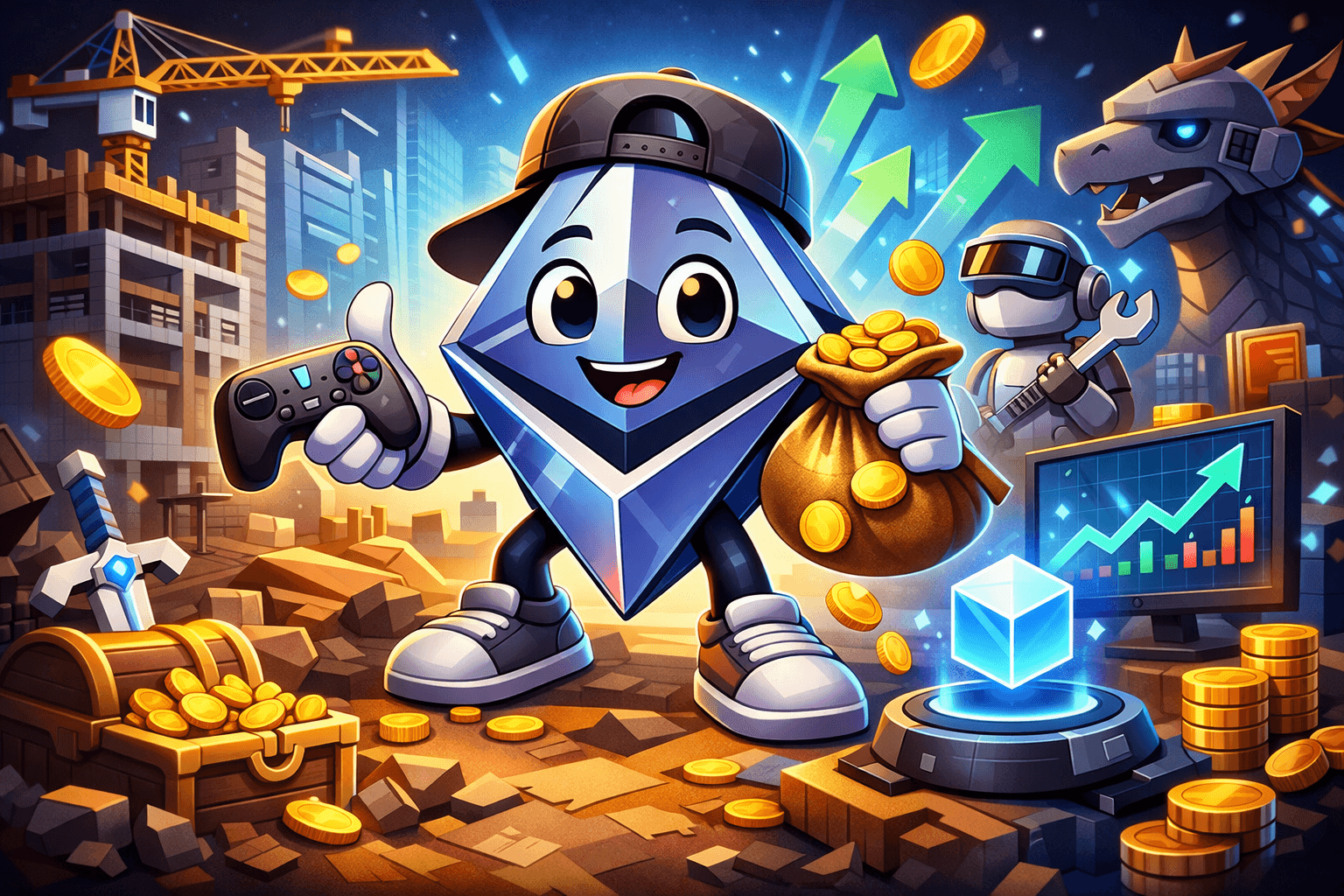
Web3 gaming is quietly rebuilding as capital and compliance return to the sector.

Bruno A
Last updated: January 11, 2026 11:19 am
Bruno A
Published: January 11, 2026
Share
SHARE
Highlights
  • After years of collapse, blockchain gaming studios are attracting new investment, clearer regulation, and modern infrastructure that finally works at scale.

Capital, compliance, and infrastructure are quietly reshaping how blockchain games are being built

For much of 2023 and early 2024, Web3 gaming was treated as crypto’s cautionary tale. Token crashes, abandoned play-to-earn economies, and a wave of studio shutdowns left investors wary and developers silent. That changed this quarter.

Contents
  • Capital, compliance, and infrastructure are quietly reshaping how blockchain games are being built
    • When venture capital quietly reversed course
    • Why regulators are no longer blocking the studios
    • The infrastructure shift that made Web3 playable again
    • Where the money is actually being made

New venture capital flows, fresh regulatory frameworks in Asia and Europe, and a quiet migration of game studios onto faster layer-2 networks are driving a reversal that few outside the industry noticed. Web3 gaming investment data from PitchBook and Delphi Digital shows early-stage funding climbing for three consecutive quarters, even as token prices across the broader altcoin market remained volatile.

What is emerging is not another speculative boom — it is a structural rebuild.

Studios that once depended on unsustainable token emissions are now designing controlled tokenized game economies tied to user growth, in-game spending, and regulated distribution models. At the same time, venture funds that fled after the 2022 crash are selectively returning, focusing on infrastructure rather than hype.

This is why developers are coming back.

When venture capital quietly reversed course

Animoca Brands, Andreessen Horowitz’s crypto arm, and South Korean publisher Netmarble have all resumed direct investments into Web3 gaming studios since late 2025, according to regulatory filings and deal trackers. These are not headline-grabbing billion-dollar bets. They are $3 million to $15 million strategic stakes aimed at studios building for mobile distribution, Asia-Pacific regulatory regimes, and on-chain asset ownership.

The capital shift matters because Web3 gaming was never killed by players — it was killed by funding structures. Earlier projects relied on speculative token launches to finance development, leaving studios exposed to crypto market cycles. Today’s funding models look closer to traditional gaming, with equity, milestone-based financing, and locked token allocations that cannot be dumped on public markets.

That is why crypto gaming venture capital is now rising even while retail trading volumes remain muted.

Why regulators are no longer blocking the studios

One of the biggest barriers to blockchain gaming has quietly faded: compliance.

Japan’s Financial Services Agency, Singapore’s MAS, and the European Union’s Markets in Crypto-Assets framework have all created clearer paths for tokenized game economies. Instead of banning game tokens, regulators now require disclosure, reserve management, and user-protection standards — rules that studios can actually design around.

That clarity has triggered a wave of studio relocations into compliant jurisdictions. Game developers that once operated through shell entities in the Caribbean are now incorporating in Tokyo, Seoul, and Paris, opening bank accounts and signing distribution deals with Apple, Google, and Steam.

Blockchain gaming regulation has become predictable enough for real companies to build again.
The infrastructure shift that made Web3 playable again

The other reason developers are returning has nothing to do with tokens.

Layer-2 gaming infrastructure has matured. Networks such as Immutable X, Arbitrum Nova, and Polygon zkEVM now allow studios to run on-chain economies without forcing players to pay high gas fees or interact directly with wallets. Transactions are abstracted, assets settle on Ethereum, and players experience something that finally feels like a game — not a crypto dashboard.

This is what enables tokenized game economies to exist without destroying user experience. It is also why web3 gaming investment is now flowing into middleware providers, SDKs, and account-abstraction startups rather than into flashy NFT collections.

The plumbing finally works.

Where the money is actually being made

Behind the scenes, publishers are shifting toward revenue models that look suspiciously traditional. Instead of rewarding players with inflationary tokens, studios now monetize through cosmetic NFTs, marketplace fees, and premium content — with ownership recorded on-chain but spending handled in stablecoins or local currency.

That shift is attracting institutional investors who previously avoided crypto gaming. Stable revenue, compliant structures, and predictable user acquisition are exactly what funds demand. For the first time, blockchain games are starting to resemble businesses rather than experiments.

Token prices may not reflect it yet, but development activity does. GitHub commits, hiring data, and studio launches across Asia and Europe have all ticked higher since late 2025, according to Electric Capital and Crunchbase.

The Web3 gaming sector is not roaring back — it is rebuilding under the radar.

Sign Up For Daily Newsletter

Be keep up! Get the latest breaking news delivered straight to your inbox.
By signing up, you agree to our Terms of Use and acknowledge the data practices in our Privacy Policy. You may unsubscribe at any time.
Share This Article
Facebook Pinterest Whatsapp Whatsapp Telegram Threads Email Copy Link Print
How do you feel about this story?
Love0
Sad0
Happy0
Sleepy0
Angry0
Dead0
Wink0
ByBruno A
Follow:
Editor-in-Chief at MetroScroll. Passionate about uncovering the truth, exploring global issues, and delivering insightful, thought-provoking stories.
Previous Article NFT Trading Volumes Stabilize After Market Reset
Next Article NFTs Are Dying as Collectibles. Utility Is the New Crypto Battleground
Leave a Comment Leave a Comment

Leave a Reply Cancel reply

Your email address will not be published. Required fields are marked *

XFollow
PinterestPin
TelegramFollow
PayPalSend

You Might Also Like

LEARNWEB3 & NFT

What Is an NFT?

The blockchain system that turns digital files into ownable property…

3 Min Read
WEB3 & NFT

NFTs Are Dying as Collectibles. Utility Is the New Crypto Battleground

Major brands and institutions are ditching JPEG hype for real-world…

5 Min Read
LEARNWEB3 & NFT

How NFTs Quietly Became a Pillar of Digital Asset Markets

Once dismissed as internet collectibles, NFTs are now being wired…

4 Min Read
WEB3 & NFT

NFT Trading Volumes Stabilize After Market Reset

A year after the speculative crash erased billions, a quieter,…

7 Min Read
MetroScrollMetroScroll
Follow US
© 2026 MetroScroll. All rights reserved.
Welcome Back!

Sign in to your account

Username or Email Address
Password

Lost your password?