
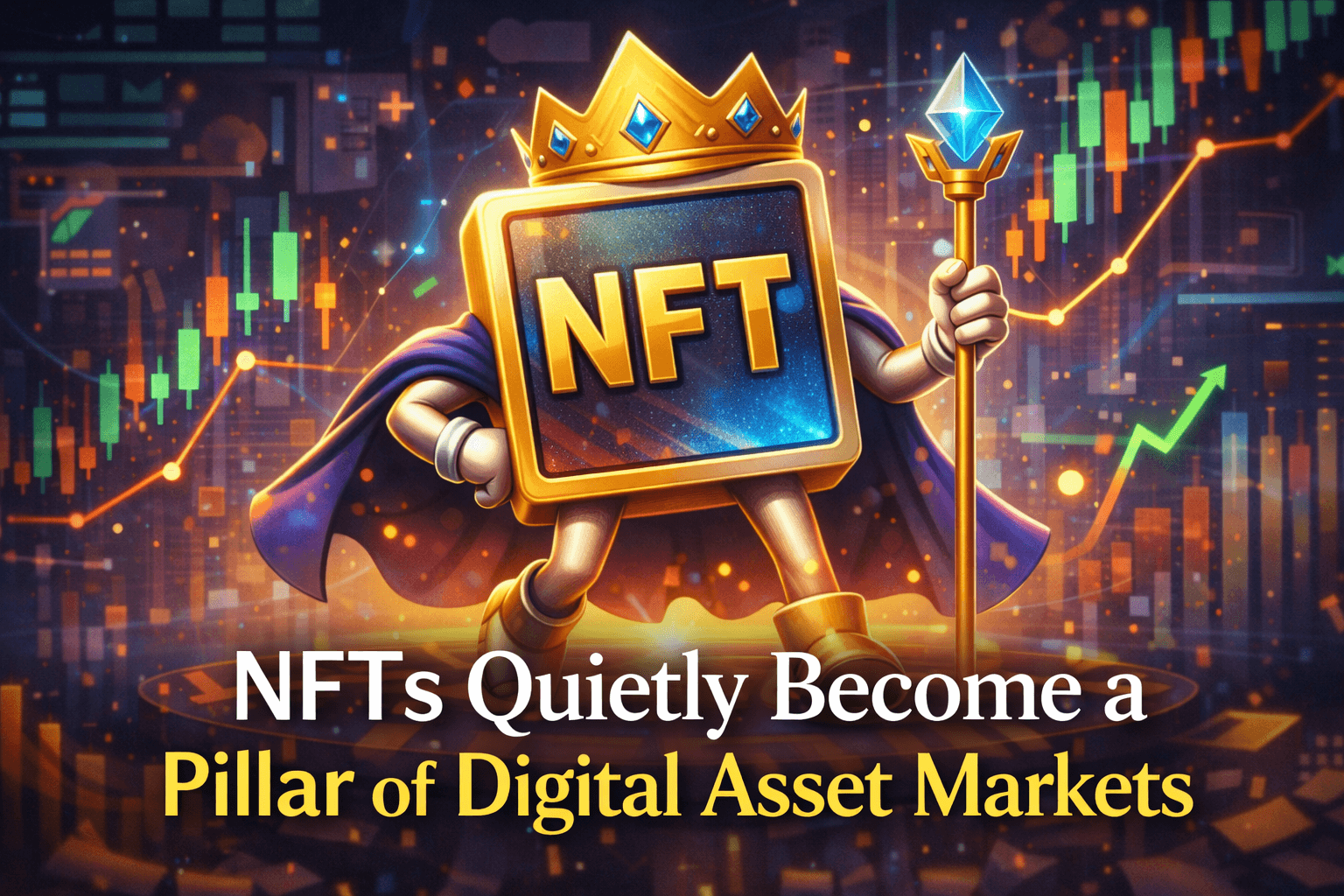

Once dismissed as internet collectibles, NFTs are now being wired into custody systems, funds, and institutional balance sheets.
NFTs no longer live on the fringes of crypto.
What began as an experimental format for digital art has evolved into a full financial layer of the blockchain economy. Non-fungible tokens now sit inside regulated custody platforms, trade through professional market makers, and are increasingly referenced in compliance filings alongside Bitcoin and Ethereum.
The speculative frenzy of 2021 may have faded, but the infrastructure did not. Today’s NFT market is defined less by viral images and more by settlement rails, legal ownership, and capital flows.
Trading volumes across major NFT marketplaces have stabilized after two years of contraction, while high-value assets such as generative art collections, gaming licenses, and real-world tokenized items continue to change hands among long-term holders. Behind the scenes, this has triggered a wave of upgrades across storage, compliance, and custody.
Where NFTs are actually being bought now
The public face of NFT trading remains marketplaces such as OpenSea, Blur, Magic Eden, and LooksRare. These platforms still dominate retail discovery, with Ethereum and Solana networks accounting for the majority of high-value activity.
But large trades increasingly bypass open order books. Over-the-counter NFT desks and private brokers now handle blue-chip collections, gaming IP, and institutional portfolios. These deals are structured to minimize slippage, reduce front-running, and ensure compliance with jurisdictional rules.
This split between public marketplaces and private execution mirrors how traditional asset classes matured, and it has changed how price discovery works in the NFT ecosystem.
How custody and storage reshaped ownership
As NFTs grew in value, custody became unavoidable.
Firms such as Coinbase Custody, Fireblocks, and Anchorage Digital now offer institutional-grade NFT storage alongside crypto assets. These platforms provide segregated wallets, insurance, compliance reporting, and key-management systems that allow funds and corporates to hold NFTs without exposing themselves to operational risk.
This shift is why NFTs are now appearing inside tokenized funds and structured products. A generative art piece or a game license NFT can be held, audited, and transferred like a financial instrument.
For regulators, that has made NFTs easier to supervise, but it has also pulled them deeper into the financial system.
Why funds and treasuries are paying attention
NFTs have quietly become part of the alternative-assets conversation.
Family offices, crypto hedge funds, and digital asset managers now allocate to NFTs alongside DeFi tokens and layer-one_toggle networks. Some funds specialize in gaming and metaverse assets, while others focus on cultural IP and royalty-bearing NFTs.
These vehicles rely on professional custody and pricing models, which is why NFT investment funds now track floor prices, liquidity, and realized sales much like commodity or art funds do.
That financialization has pushed NFTs away from casual speculation and toward portfolio strategy.
The line between utility and security
As NFTs are used to represent access rights, revenue shares, and tokenized real-world assets, regulators have started paying closer attention.
Some jurisdictions are now evaluating whether certain NFTs fall under securities or consumer-protection laws, particularly when they promise cash flows or ownership claims. This has forced marketplaces and issuers to tighten disclosures and limit how NFTs are marketed.
The result is a market that looks less like a digital flea market and more like a structured asset class with rules, custodians, and compliance.
NFTs are no longer just something you buy.
They are something you hold.