
The motorcade was quietly rerouted — and the public was told almost nothing about what really triggered it.
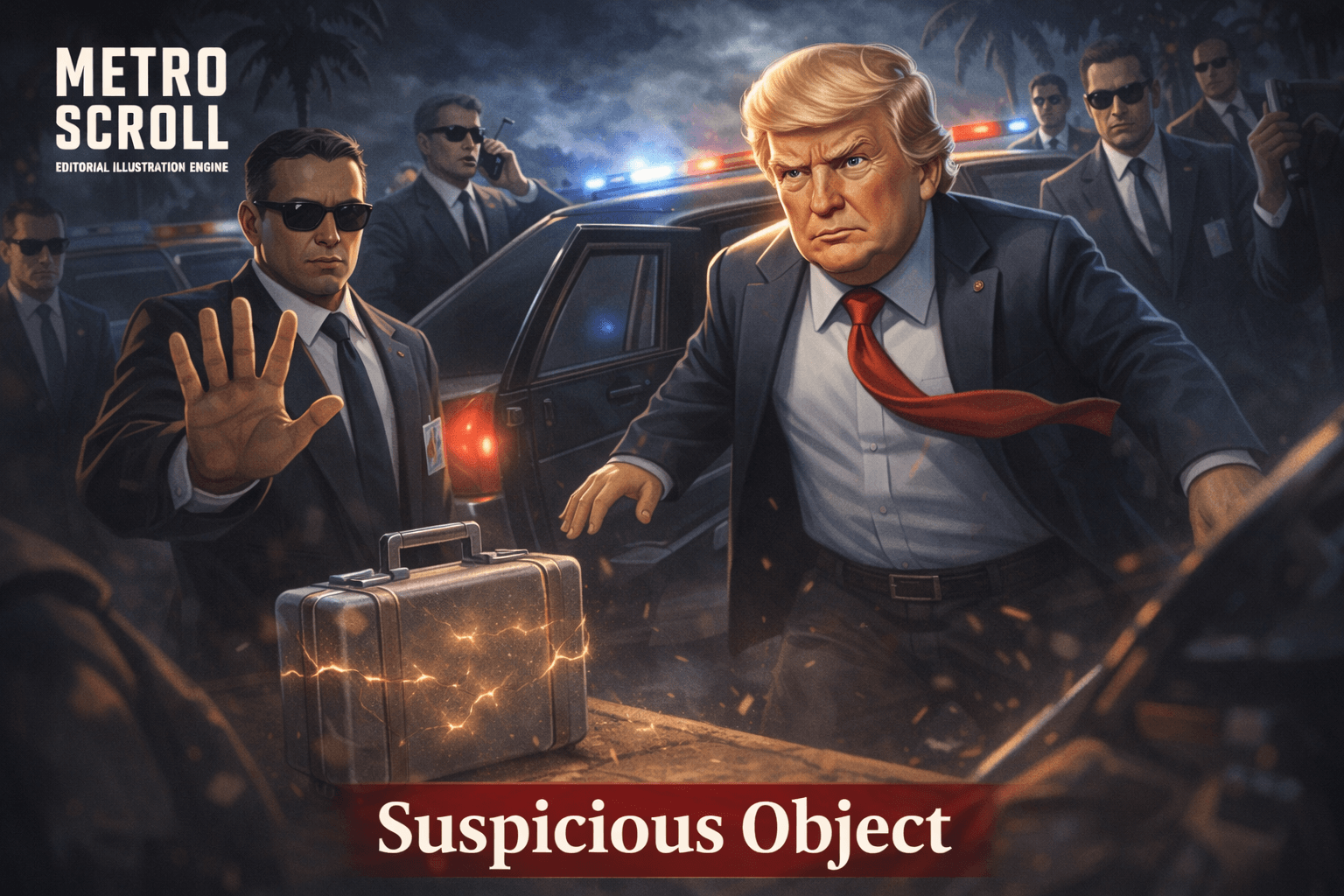
The White House called it a “suspicious object.”
The Secret Service called an audible.
And the president’s motorcade quietly disappeared from its normal route on the way to Palm Beach International Airport.
That’s not a glitch.
That’s a stress test.
When the most protected man on earth changes course at the last minute, it means the system detected something it couldn’t afford to ignore. And yet, the public was given only a single sterile sentence.
That silence is the real story.
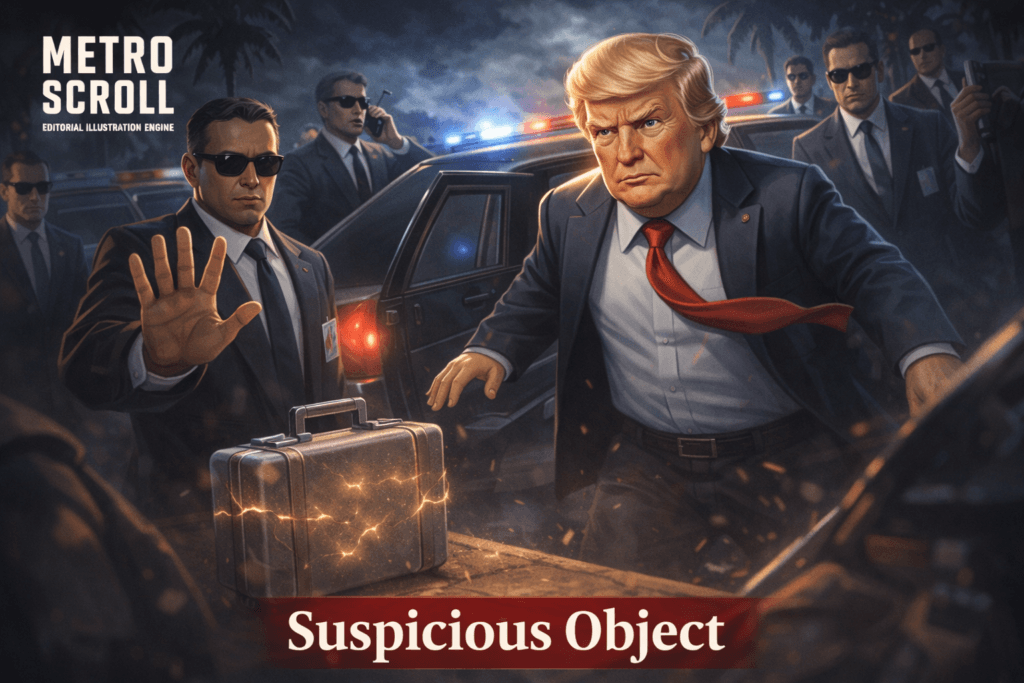
The Reroute That Was Never Supposed to Be Seen
Secret Service advance teams sweep every inch of a presidential route hours before a motorcade moves. That sweep didn’t just flag something unusual — it triggered a live operational change.
Motorcades don’t reroute unless the risk profile jumps.
That means a variable entered the system that could not be cleared in time.
And when that happens, secrecy becomes the final layer of defense.
What “Suspicious Object” Really Means in Federal Security Language
The phrase is deliberately vague.
Inside federal protection units, it is used when:
- A potential threat can’t be immediately verified
- Or when public disclosure would create secondary risk
The object could be nothing.
Or it could be something that cannot be discussed without compromising ongoing investigation.
The government chose silence.
That is never accidental.
Who Wins When the Details Stay Classified
The Secret Service wins.
The president stays protected.
The system avoids panic.
The public loses transparency.
In an election year, that tradeoff matters. The more frequently security routes are altered, the more pressure builds on the invisible perimeter around power.
And once that perimeter starts moving, the political atmosphere changes with it.