

President Donald Trump forces a strategic retreat in Iran after threatening military force that would dwarf previous nuclear sanctions, backed by a massive U.S. fleet deployment.
The Human Cost of the Nuclear Standoff
The shadow of the gallows in Tehran has long been a grim tool of state leverage, but for several individuals facing imminent execution, their fate became the focal point of a high-stakes military gambit. This isn’t just about regional hegemony; it’s about the visceral reality of lives hanging by a thread—and a U.S. President willing to tie those lives to the movement of carrier strike groups. By centering the conflict on human rights through a lens of overwhelming military power, the administration has shifted the conversation from abstract diplomacy to immediate, life-and-death consequences.
A “Peanuts” Comparison and the Naval Surge
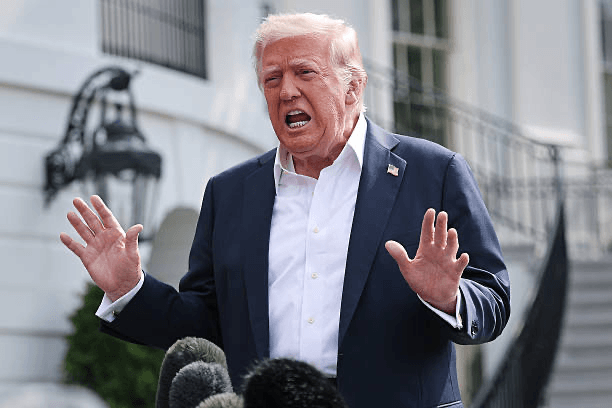
The deterrent factor reached a boiling point when President Trump issued a stark warning to Iranian leadership, making it clear that any further executions would trigger a response “harder than you’ve ever been hit.” He explicitly noted that the previous dismantling of the Iran Nuclear Deal—once considered the pinnacle of American economic and diplomatic pressure—would look like “peanuts” compared to the kinetic options currently on the table. This rhetoric was not empty; it was echoed by the churn of the ocean as a massive U.S. naval fleet moved into striking distance within the Persian Gulf region.
This aggressive posture appears to have forced an uncharacteristic concession from the Iranian government. Rather than the standard diplomatic “postponement” often used to save face, officials in Tehran reportedly confirmed a full cancellation of the scheduled executions. This distinction is critical; it suggests a total, if temporary, breakdown in Iranian resolve when faced with the tangible threat of a multi-carrier response.
The New Doctrine of Immediate Accountability
Beyond the immediate cessation of the hangings, this moment defines a “boots-on-the-ground” shift in U.S.-Iran relations. Experts view the deployment of the fleet not just as a defensive measure, but as a mobile, sovereign piece of American territory capable of enforcing humanitarian standards through sheer intimidation. The unspoken stakes involve a broader message to the Middle East: the United States is willing to bypass the slow-moving gears of international sanctions in favor of direct, overwhelming military threats to achieve specific moral and political ends.
The long-term question remains whether this “peace through strength” maneuver creates a sustainable precedent or merely a pause in hostilities. For now, the U.S. Navy remains on station, serving as a silent, steel sentinel watching the Iranian coast, ensuring that the “good sign” of the cancellation isn’t reversed once the cameras turn away.