

Europe’s major airlines are pulling back as the Middle East edges closer to open conflict. KLM and Air France have suspended or rerouted flights across the region after Iran warned that any U.S. military strike—of any kind—would be treated as full-scale war.
The move comes as Washington deploys an aircraft carrier strike group and additional military assets toward the region, fueling fears of a major escalation. A senior Iranian official, speaking anonymously, said Iran is on “high alert” and preparing for the “worst-case scenario,” stressing that even a “limited or surgical” American attack would be met with the hardest possible response.
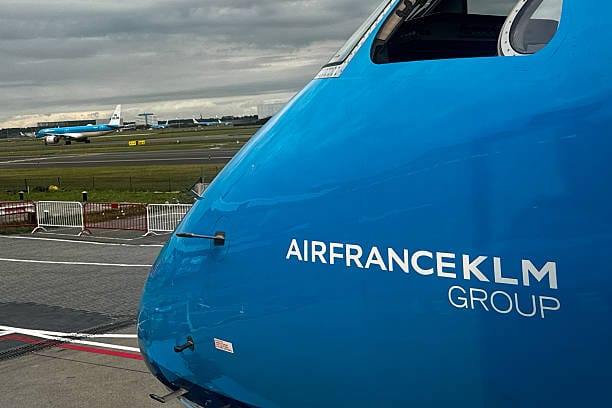
Air France confirmed it has temporarily halted flights to Dubai, citing the rapidly deteriorating security environment. KLM went further, suspending services to Tel Aviv, Dubai, Dammam, and Riyadh, and avoiding the airspace over Iran, Iraq, Israel, and several Gulf states. Both airlines said passenger safety is driving the decisions, as airspace risks multiply by the hour.
The standoff follows weeks of unrest inside Iran and renewed rhetoric from Donald Trump, who recently said a U.S. “armada” is heading toward Iran while warning Tehran against killing protesters or reviving its nuclear program. Iran’s leadership has rejected the threats outright, with officials vowing retaliation if sovereignty is violated.
At the same time, the Pentagon released a new defense strategy accusing Iran of seeking to rebuild its military strength, potentially pursuing nuclear weapons again, and continuing to destabilize the region through proxy forces. The document reaffirmed U.S. support for Israel and accused Tehran of having “the blood of Americans on its hands.”
Inside Iran, the situation is already dire. A brutal crackdown on nationwide protests has left cities scarred by fire and violence, with banks torched, mosques damaged, and entire neighborhoods under siege. Activists estimate thousands have been killed, with gunfire, birdshot, and mass arrests used to crush dissent as communications were cut nationwide.
As airlines ground flights and militaries reposition forces, the warning signs are unmistakable: commercial aviation is reacting to what governments fear may be the opening phase of a much larger confrontation.