

President Donald Trump has reignited tensions with America’s allies after questioning whether North Atlantic Treaty Organization troops would truly stand with the United States in a future war, citing their role in Afghanistan. His remarks—suggesting allies stayed “a little off the frontlines”—have drawn sharp responses across Europe, particularly from Britain.
From a purely military standpoint, there is a narrow truth: the U.S. could fight major campaigns alone. But that misses the point. Afghanistan was the first—and only—time NATO invoked Article 5, collective defense. America was attacked. The allies followed. That fact undercuts the claim that they wouldn’t be there when it mattered.
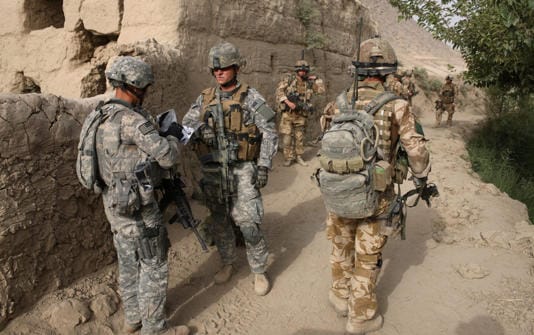
British forces paid heavily. While some allied sectors were quieter, others were anything but. Danish units suffered proportionally higher casualties than the U.S. or Britain. Estonian troops fought alongside British brigades in Helmand “like tigers,” clear-eyed about their mission: stand with America so America would stand with them. That clarity mattered.
Operational reality also matters. Britain entered Afghanistan—and Iraq—overstretched, under-resourced, and politically unclear about objectives. U.S. Marines who surged into Helmand in 2009 found a campaign that had promised more than it could sustain. The critique from American commanders wasn’t about courage; it was about mass, logistics, and coherence.
Still, the central question isn’t whether allies were indispensable tactically—it’s whether they would show up strategically. History answers that. They did. And, veterans and leaders argue, they would again. British, Danish, Dutch, Swedish—and likely Italian and Spanish—forces would stand with the U.S. if called. Every American service member who fought alongside them knows it.
Trump’s skepticism may resonate domestically, but abroad it lands as a misread of alliance loyalty—one forged in blood, not rhetoric.