
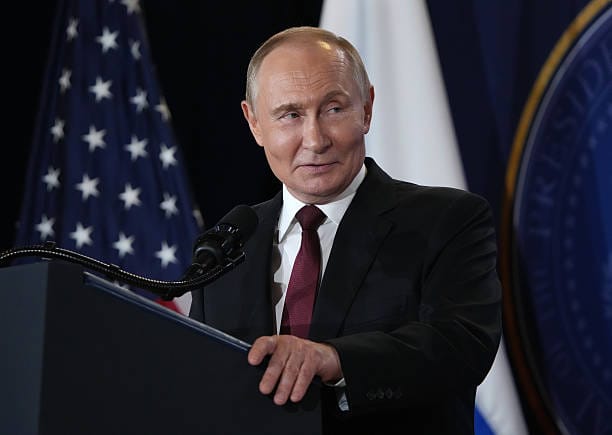

In a rare and candid moment, Russian President Vladimir Putin’s end-of-year press conference revealed increasing frustration within Russia over economic hardships and the ongoing war with Ukraine. The 73-year-old leader fielded questions from the public, many of whom expressed concerns about a struggling economy, rising living costs, and the state of the nation after years of conflict.
While European leaders offered Ukraine a significant €90 billion interest-free loan to support its military, Putin fiercely criticized plans to seize Russian assets, calling them “daylight robbery.” Despite these tensions, the state of Russia’s economy remained a key topic, with many Russians questioning the government’s handling of inflation and wages.
One young medical student voiced concerns about the difficulty of starting a family, citing the low salaries of young professionals. Putin responded by discussing student loans and state-funded education, but his response was seen by many as disconnected from the realities of ordinary citizens.
A soldier’s widow raised the issue of delayed pension payments, prompting an apology from Putin and a promise to resolve the matter swiftly. Meanwhile, a mother of six, struggling with rising inflation and living costs, called for more government support after her family lost its welfare benefits by a small margin. These stories highlighted the growing dissatisfaction among the public with the government’s ability to address their needs.
Despite the orchestrated nature of the event, several critical comments broke through, including messages calling the conference a “circus” and criticizing the government for its handling of services like the internet and water supply.
Putin’s response to these criticisms, however, painted a different picture. While acknowledging that Russia’s economy was slowing, he insisted that the country’s macroeconomic stability remained intact. He framed the economic slowdown as a strategic choice to preserve the quality of Russia’s economy in the long run. Yet, analysts suggest this explanation may not fully reassure the Russian people, who continue to face mounting economic challenges.
Throughout the nearly five-hour press conference, Putin also touched on personal topics, offering advice on love, family, and religion. However, it was clear that the pressure from both internal and external challenges weighed heavily on the Russian leader.
As the war with Ukraine continues and Russia faces increasing isolation, the future remains uncertain. Talks for a ceasefire continue, but for many Russians, the true cost of the conflict is becoming increasingly difficult to ignore.