

The beginning of 2026 has brought a stark reminder to the digital asset community: in a world of institutional “super-cycles” and record-breaking crypto crime, the only person who can truly guarantee the safety of your funds is you. As exchange balances hit their lowest levels since 2018, the transition to self-custody is no longer a niche preference—it is a financial necessity.
The Counterparty Risk of 2026
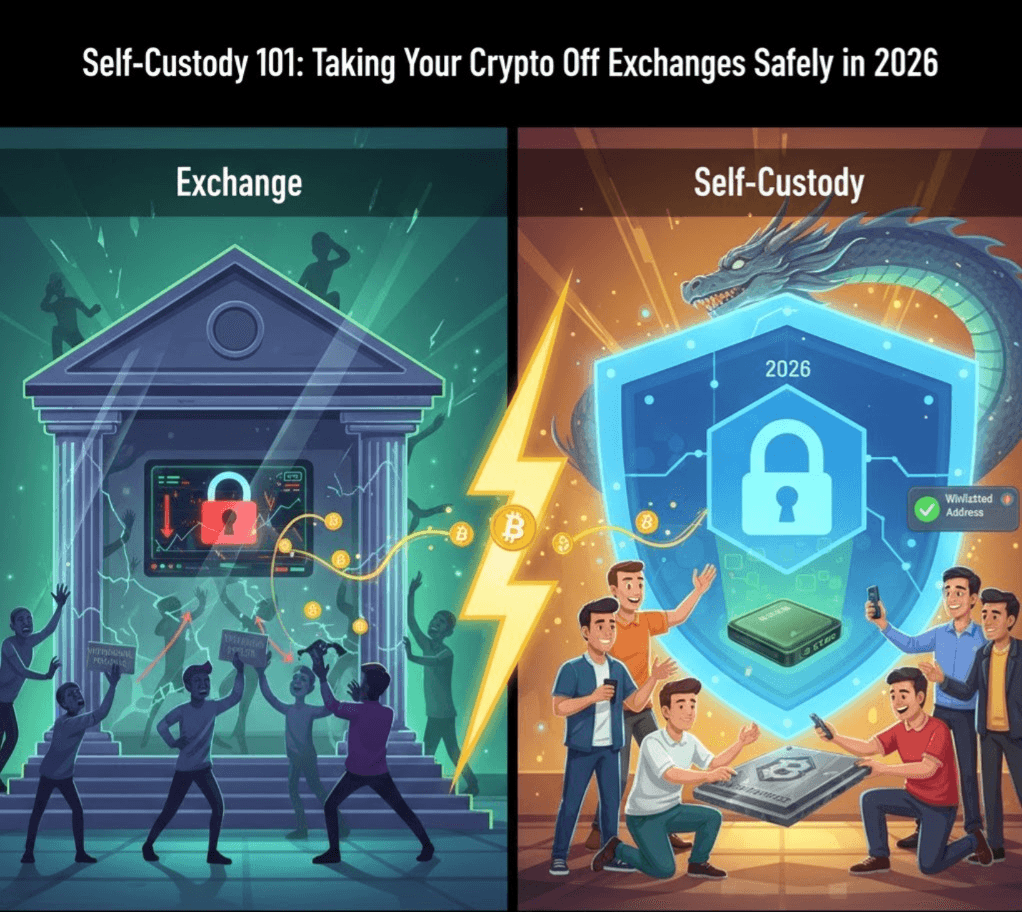
While major exchanges have matured, 2025 saw record-breaking “mega-hacks” and increasing regulatory freezes that left thousands of users in “withdrawal limbo.” When you leave your assets on an exchange, you do not own crypto; you own a legal claim to crypto. If the exchange faces a liquidity crisis or a nation-state cyber attack, that claim can be frozen instantly.
Step 1: Choosing Your Vault
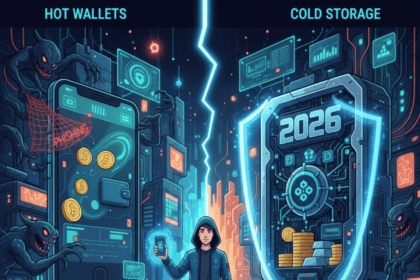
Self-custody starts with a non-custodial wallet. In 2026, the gold standard remains Hardware Wallets (Cold Storage).
- Hardware Wallets (Ledger, Trezor, Coldcard): These physical devices keep your private keys offline, making them immune to 99% of internet-based attacks.
- Software Wallets (MetaMask, Phantom): Better than an exchange for daily use, but still “hot” (connected to the internet). Use these only for small amounts intended for immediate trading.
Step 2: The Sacred Seed Phrase
When you set up your wallet, you will generate a 12 or 24-word Recovery Phrase.
- The Rule: Never take a photo of it, never type it into a computer, and never share it with “customer support.”
- The 2026 Pro-Tip: Use a steel backup plate. Paper rots and burns; engraved stainless steel is the only way to ensure your recovery phrase survives a house fire or flood.
Step 3: The “Test Flight” Withdrawal
Before moving your entire portfolio, perform a small “test” transaction.
- Copy your new wallet address.
- Paste it into the “Withdraw” section of your exchange.
- Send the minimum amount allowed (e.g., $10 worth of BTC or ETH).
- Once it arrives safely, you have “cleared the path” for the rest of your assets.
Step 4: Whitelisting and Security
Most major exchanges in 2026 offer “Address Whitelisting.” Once you’ve confirmed your personal wallet address, add it to your whitelist. This creates a 24-48 hour “cooldown” period for any new addresses, meaning even if a hacker gains access to your exchange account, they cannot instantly drain your funds to an unknown wallet.