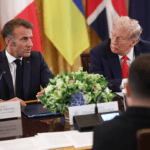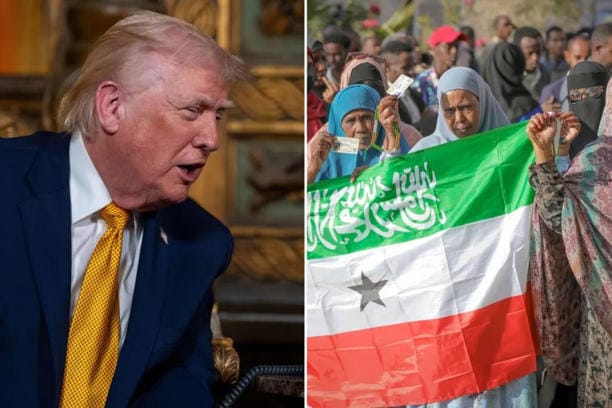


The statement “China is welcome” is a seismic shift in European rhetoric. On January 20, 2026, as President Trump enters his second year back in power, the European Union is facing a brutal reality: the “transatlantic bond” has been replaced by a “transactional bill.” Trump’s recent moves—leaking private texts from President Macron, threatening to bankrupt the French luxury sector, and suggesting the U.S. should “take” Greenland—have left European leaders convinced that they can no longer rely on Washington as a stable partner.
The Elephant in the Room
Why is Europe welcoming China now, despite concerns over human rights and intellectual property? Because Trump has removed the middle ground. By demanding a $1 billion “ante” for a seat on his “Board of Peace” and ignoring European sovereignty on Arctic defense, Trump has inadvertently made China look like the more “predictable” partner. For the EU, Chinese investment isn’t just about money; it’s a geopolitical insurance policy. If the U.S. cuts off security or imposes massive tariffs, Europe needs a secondary global power to keep its markets afloat.
The Anatomy of a Failure
This shift is both a result of recent actions and long-standing dependence.
- The Action: Trump’s January 2026 threats to annex Greenland by “Executive Order” if Denmark refuses to sell have horrified Brussels. It’s seen as a violation of the very liberal order the U.S. spent 80 years building.
- The Dependence: Europe’s green energy transition is almost entirely powered by Chinese rare earths and batteries. Decoupling from China while simultaneously entering a trade war with Trump would mean total industrial collapse for Germany and France.
The Brutal Reality
The Brutal Reality is that Europe is “hedging against a hegemon.” As Trump pushes an “America First” agenda that treats allies like clients, the EU is responding by diversifying its dependencies. By welcoming Chinese direct investment, European leaders are telling the White House: “If you treat us like a colony, we will trade with your rivals.” The result is a 2026 global order where “The West” is no longer a unified bloc, but a collection of competing economic interests.