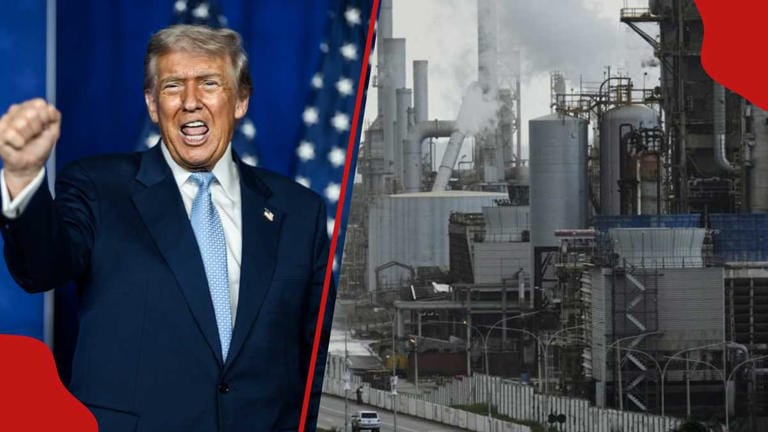

Following the capture of Nicolás Maduro on January 3, 2026, President Donald Trump announced that the United States will temporarily “run” Venezuela to oversee a “safe and judicious transition.” Central to this strategy is the immediate revitalization of Venezuela’s oil sector, which holds the world’s largest proven reserves at over 303 billion barrels.
During a press conference at Mar-a-Lago, President Trump stated that major U.S. oil companies would be deployed to repair the country’s “badly broken” infrastructure. He characterized the move as a reclamation of American property, asserting that the socialist regime had “stolen” an industry originally built by U.S. expertise. “We’re going to have our very large U.S. oil companies… go in, spend billions of dollars, fix the infrastructure, and start making money for the country,” Trump said, adding that the U.S. would also be “reimbursed” for the costs of the military operation.
Strategic Objectives and Global Impact
- Energy Dominance: The administration aims to move Venezuela from its current production of roughly 1 million barrels per day back toward its historical peak of over 3 million, potentially altering global energy pricing.
- Geopolitical Realignment: By taking control of the sector, the U.S. intends to cut off “stolen” oil flows to adversaries. Currently, China is estimated to purchase nearly 80% of Venezuelan crude, often through “ghost tankers” to bypass sanctions.
- Temporary Administration: Trump indicated that a team including Secretary of State Marco Rubio and Defense Secretary Pete Hegseth would oversee the transition, working with Vice President Delcy Rodríguez to maintain institutional stability.
Challenges to Rebuilding
Energy analysts and organizations like the Energy Information Administration (EIA) warn that restoring the industry will not be immediate. Experts from Rice University estimate that it could take at least a decade and over $100 billion in investment to reach production levels of 4 million barrels per day. Deteriorating pipelines, a “hollowed out” state oil company (PDVSA), and the flight of skilled labor remain significant hurdles to the President’s vision.