

The blockchain system that turns digital files into ownable property
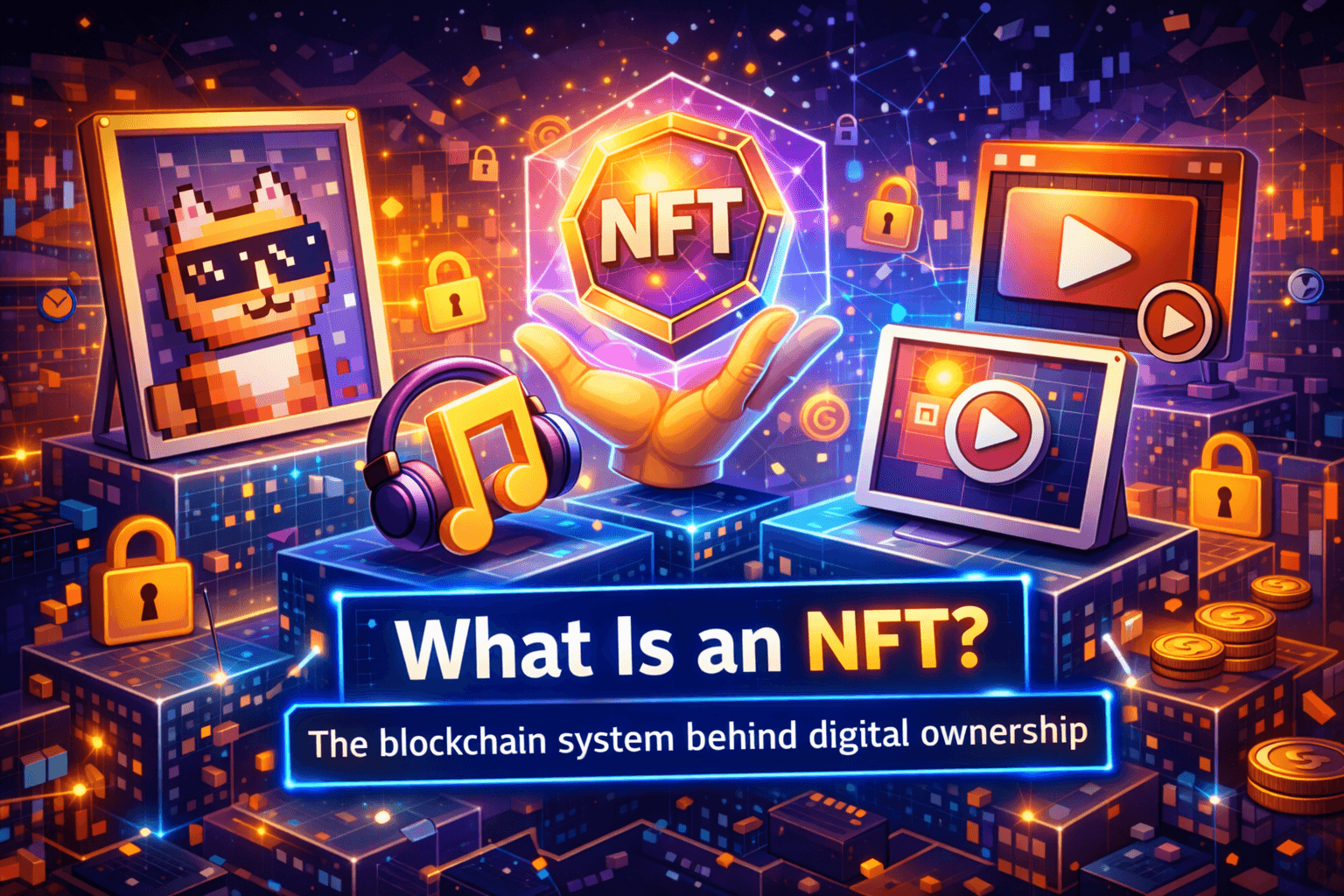
An NFT, or non-fungible token, is a digital asset that represents ownership of a unique item recorded on a blockchain. Unlike cryptocurrencies such as Bitcoin or Ethereum, NFTs are not interchangeable. Each one is distinct, with its own identity, history, and value.
NFTs can represent art, music, videos, in-game items, virtual land, or any digital file that can be tokenized. What makes them different from ordinary files is not the image or song itself, but the cryptographic record that proves who owns the original version.
That ownership record lives on a blockchain, where it cannot be altered or erased. When an NFT is sold, the blockchain updates to show the new owner, creating a permanent public trail of custody that follows the asset wherever it goes.
How Digital Files Become Ownable Assets
Before NFTs, digital files could be copied endlessly, making true ownership almost impossible to define. NFTs changed that by attaching a unique token to a specific digital item.
This token acts like a certificate of authenticity. It does not stop others from viewing or copying the image or video, but it proves who owns the official, blockchain-verified version. That distinction is what allows NFTs to be bought, sold, and collected like physical art.
The token itself contains data pointing to the asset and its creator, along with a record of every transaction it has ever gone through.
Why NFTs Are Traded With Cryptocurrency
NFTs are usually bought and sold using cryptocurrencies because they live on blockchain networks such as Ethereum, Solana, and others. These networks provide the infrastructure that allows tokens to move between wallets without intermediaries.
When someone buys an NFT, the cryptocurrency payment and the ownership transfer happen together on the blockchain. This removes the need for brokers, clearinghouses, or payment processors, allowing NFTs to be traded globally with minimal friction.
Where NFTs Fit Into the Digital Economy
NFTs are now used across art, gaming, music, sports, and virtual worlds. Artists use them to sell work directly to fans. Game developers use them to create items that players can truly own. Brands and media companies use them to distribute collectibles and digital rights.
At the same time, NFTs have attracted regulatory attention as governments examine how digital ownership, intellectual property, and financial compliance should apply to tokenized assets.
What began as a way to sell digital art has evolved into a system for defining ownership in the digital age.