

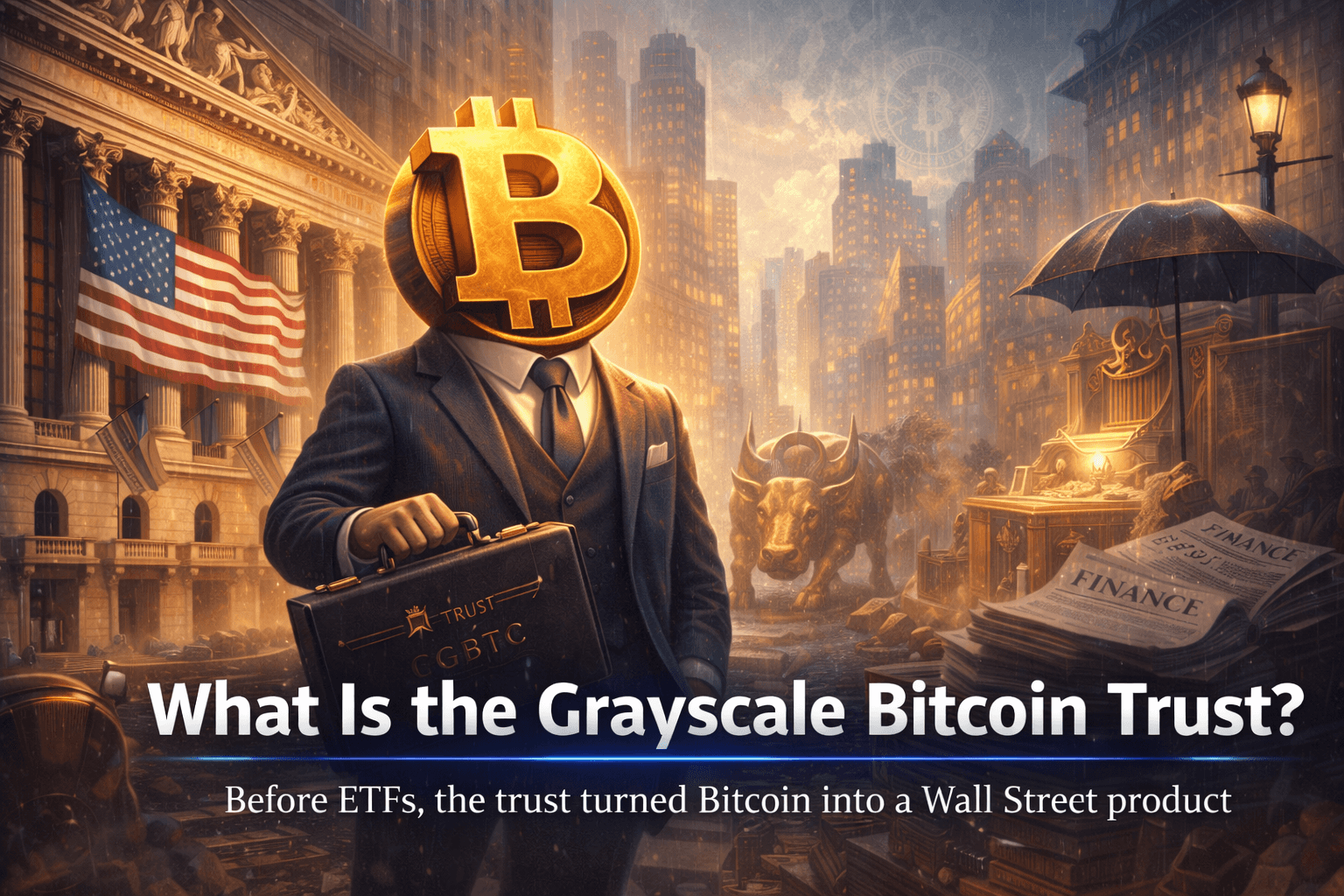

The Wall Street vehicle that let institutions buy Bitcoin before ETFs existed
The Grayscale Bitcoin Trust, often called GBTC, is an investment product that allows investors to gain exposure to Bitcoin without directly holding or managing cryptocurrency.
It was launched in 2013, when most financial institutions were barred from touching digital assets. At the time, buying Bitcoin required managing wallets, private keys, and unregulated exchanges. Grayscale created a structure that made Bitcoin accessible through traditional brokerage accounts.
Instead of owning Bitcoin directly, investors buy shares of the trust. Each share represents a portion of Bitcoin held by Grayscale in custody. The value of those shares is tied to the price of Bitcoin, though they can trade above or below the actual value of the Bitcoin inside the trust.

How GBTC Works
Grayscale holds a large pool of Bitcoin in cold storage on behalf of investors. The trust issues shares backed by that Bitcoin, which then trade on public markets.
Unlike an ETF, GBTC does not allow investors to redeem shares for Bitcoin. That design means supply and demand can cause the share price to drift away from the value of the underlying Bitcoin holdings. At times, GBTC has traded at a large premium. In recent years, it has traded at a steep discount.
That gap between market price and Bitcoin value became one of the most closely watched distortions in crypto finance.
Why Institutions Used It
Before spot Bitcoin ETFs were approved, GBTC was one of the only ways U.S. hedge funds, retirement accounts, and institutions could gain Bitcoin exposure inside a regulated structure.
It could be held in brokerage accounts, included in funds, and reported using standard financial systems. That made it a bridge between Wall Street and the crypto economy long before banks were ready to custody digital assets directly.
Why GBTC Still Matters
Even after the launch of Bitcoin ETFs, Grayscale Bitcoin Trust remains one of the largest holders of Bitcoin in the world.
Its trading discount or premium is still watched as a signal of institutional demand and market stress. When the discount widens, it often reflects risk aversion. When it narrows, it suggests capital is moving back into crypto exposure.
GBTC helped pave the way for today’s regulated Bitcoin investment products. It was the first large-scale attempt to wrap a decentralized asset inside traditional financial infrastructure — and it changed how Wall Street interacts with crypto.