
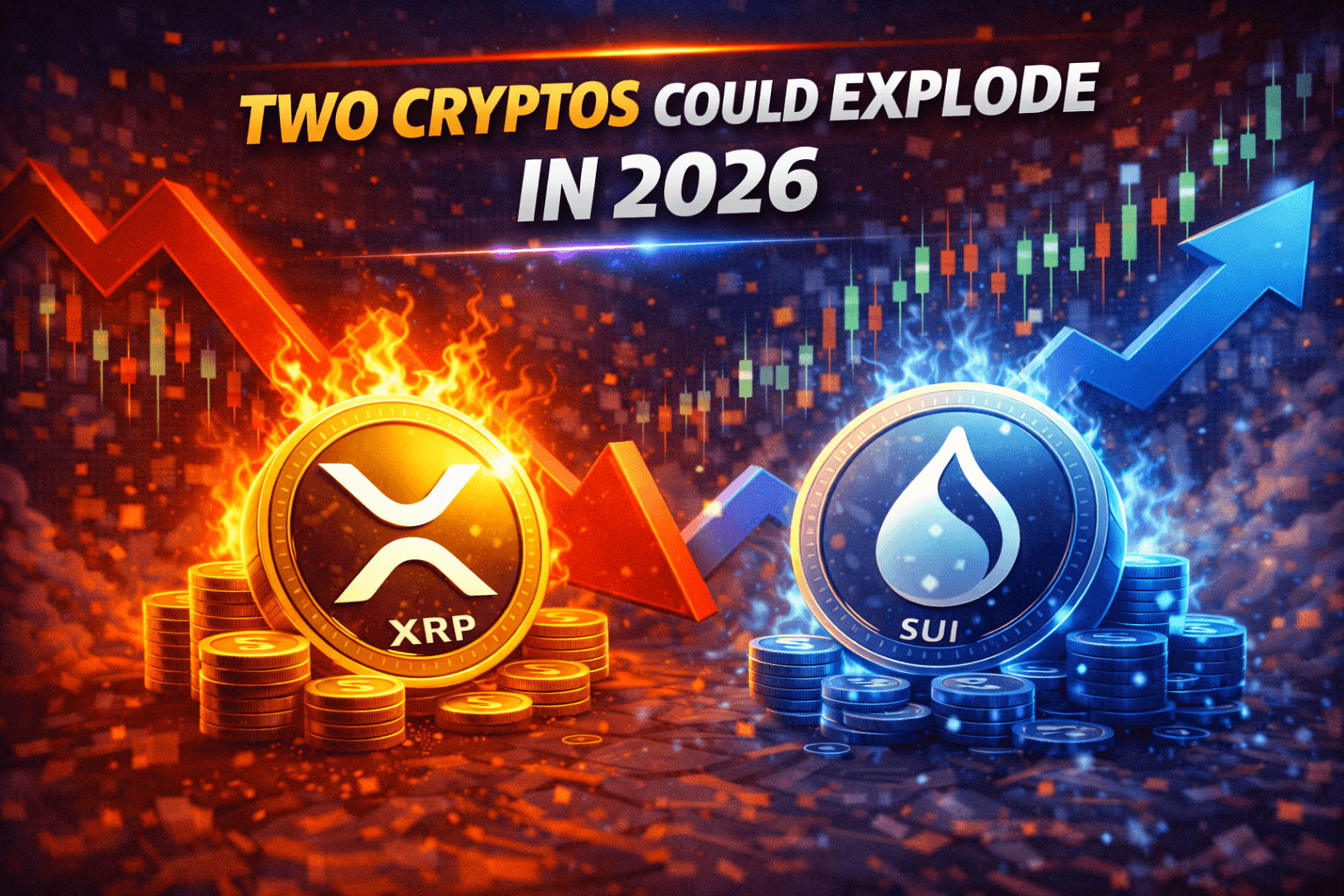

XRP and Sui are emerging as two potential comeback cryptocurrencies for 2026 as institutional adoption, new use cases, and infrastructure upgrades reshape the market.
Both assets are trading well below their 2025 highs, but investors are watching fresh catalysts that could drive renewed demand after a difficult year for risk assets.
XRP has a history of sharp rallies during favorable market conditions. After surging more than 500% in a matter of months last year, the token has since retreated to around $2, even as institutional interest has continued to grow.
Spot XRP exchange-traded funds are attracting steady inflows, providing a new channel for institutional exposure. At the same time, Ripple has strengthened its position by deploying $2.5 billion into blockchain and crypto acquisitions and securing $500 million in new financing at a $40 billion valuation.
That capital gives Ripple the ability to build a broader financial infrastructure with XRP at its core, potentially unlocking new enterprise and payment use cases. Standard Chartered has previously projected an $8 XRP price scenario, contingent on sustained adoption and favorable macro conditions.
Sui represents a different kind of opportunity. Launched in 2023, the smart contract network is positioning itself as a faster and more efficient alternative to older blockchains, including Ethereum.
Despite being down roughly 74% from its all-time high, Sui has gained traction as developers explore its high-speed transaction processing and parallel execution model. Planned network upgrades and the prospect of spot Sui ETFs in 2026 could further expand institutional participation.
Sui’s technology is particularly well-suited for decentralized finance and gaming applications, sectors where transaction speed and cost efficiency are critical. With a market capitalization far smaller than major competitors, even modest adoption gains could translate into outsized price moves.
Both XRP and Sui remain high-risk investments, sensitive to broader market sentiment and macroeconomic conditions. However, their combination of depressed valuations and identifiable catalysts has placed them on watchlists for investors looking toward 2026.