

Ukrainian President Volodymyr Zelensky on January 20, 2026, reiterated his call for the creation of a joint European armed force of at least 3 million personnel, warning that Europe must prepare for a growing Russian military threat.
Speaking to journalists, Zelensky said Russia plans to field an army of 2 to 2.5 million troops by 2030, arguing that Europe needs a force large enough to deter further aggression. He stressed that such an army would not replace national forces and would not compete with NATO.
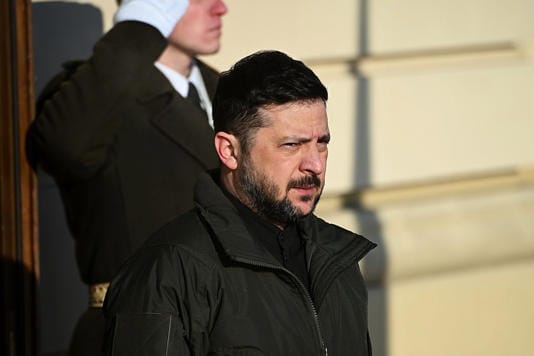
“A European army, while each country keeps its sovereign forces, must be able to respond,” Zelensky said. “It should be no smaller than 3 million.”
Zelensky first proposed the idea at the Munich Security Conference in February 2025, amid uncertainty over long-term U.S. military support should Russia escalate the war. Nearly a year later, he said European leaders have taken no concrete steps toward implementing the proposal.
“Maybe now, with all the new challenges, European leaders will take it more seriously,” he added.
Zelensky said Ukraine could serve as a cornerstone of the proposed force due to its battlefield experience, military technology, and logistics expertise gained during the war with Russia. He noted that Ukraine already shares combat-tested technologies with European partners, while receiving intelligence support from countries such as France.
The remarks coincided with the opening of the World Economic Forum in Davos, where geopolitical tensions and security challenges are high on the agenda.
The proposal comes as Donald Trump renewed pressure on NATO allies, threatening 10% tariffs on several European countries unless the U.S. reaches an agreement to acquire Greenland. Trump has said the island would be taken “one way or the other,” comments that have alarmed European leaders.
When asked whether Ukraine would send troops to Greenland if requested by Denmark, Zelensky said Ukraine is fully engaged in a full-scale war and lacks the manpower for such deployments. He added that no request has been made.
Greenland, home to roughly 56,000 people, already hosts a U.S. military base and has gained strategic importance as Arctic competition intensifies. Several EU countries have publicly backed Denmark, raising concerns about NATO unity and regional stability.