
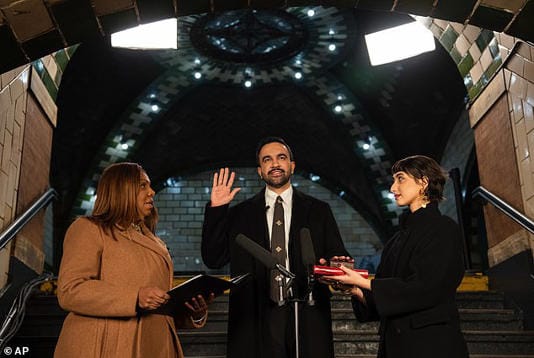

Zohran Mamdani officially became mayor of New York City just after midnight Thursday, taking the oath of office at a historic, decommissioned City Hall subway station in Manhattan — a dramatic setting chosen to underscore the city’s transit legacy and political shift.
The 34-year-old Democrat placed his hand on the Quran as he was sworn in by New York Attorney General Letitia James, becoming the first Muslim to lead America’s largest city. The ceremony took place beneath the station’s iconic arched ceilings, one of the original subway stops dating back more than a century.
“This is truly the honor and the privilege of a lifetime,” Mamdani said in brief remarks following the oath.
In his first address as mayor, Mamdani described the shuttered station as a “testament to the importance of public transit to the vitality, the health and the legacy of our city,” before announcing Mike Flynn as his new commissioner of the Department of Transportation. He closed the moment with a smile, telling attendees, “Thank you all so much, now I will see you later,” before exiting up a flight of stairs.
A second, more elaborate swearing-in ceremony is scheduled for later Thursday afternoon at City Hall, to be administered by U.S. Senator Bernie Sanders, one of Mamdani’s political inspirations. The event will be followed by a public block party along Broadway’s famed “Canyon of Heroes,” historically known for its ticker-tape parades.
But even before the celebration, the incoming administration drew attention for releasing an unusually strict list of prohibited items for the public event. Alongside expected bans on weapons, explosives, and illegal substances, the list also includes strollers, Flipper Zero devices, and Raspberry Pi computers — legal consumer technologies commonly used for coding and electronics projects.
Security officials noted that both devices contain programmable input-output pins that could theoretically be misused to interfere with equipment. However, technology experts questioned the move, pointing out that laptops — which are significantly more powerful — are not banned, making the restriction highly unusual.
Mamdani enters office as one of the most closely watched politicians in the country after winning the mayoral election with 50.78 percent of the vote, defeating former Governor Andrew Cuomo by more than 9.4 percentage points. Early voting shattered records, with more than 735,000 ballots cast — over five times the turnout seen in 2021. Voters aged 55 and younger accounted for 56 percent of early ballots, signaling a generational shift in the city’s political base.
Born in Kampala, Uganda, Mamdani is the son of filmmaker Mira Nair and academic Mahmood Mamdani. His family moved to New York City when he was seven, and he became a U.S. citizen in 2018. He went on to win a State Assembly seat in Queens in 2020 before launching his successful mayoral bid.
Running on an affordability-focused platform, Mamdani pledged sweeping changes aimed at easing the cost of living in one of the world’s most expensive cities. His proposals include free childcare, fare-free buses, a rent freeze for roughly one million households, and a pilot program for city-run grocery stores.
He now inherits a city showing signs of recovery. Violent crime has returned to pre-pandemic levels, tourism has rebounded, and unemployment has dropped back to where it stood before COVID-19. Yet concerns over high prices and rising rents continue to dominate public anxiety.
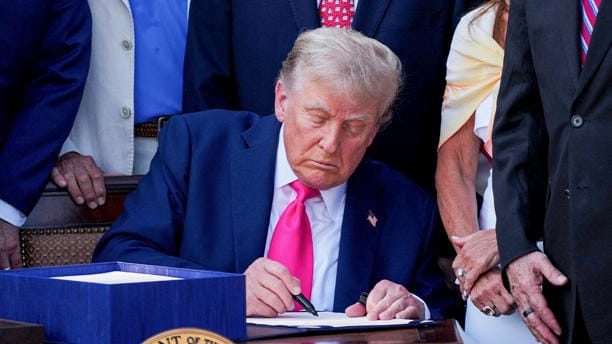
Mamdani will also have to navigate a complex relationship with President Donald Trump. During the campaign, Trump threatened to withhold federal funding and floated the idea of deploying the National Guard if Mamdani won. The tone shifted in November, when the two met at the White House in what both sides described as a cordial meeting.
“I want him to do a great job and will help him do a great job,” Trump said at the time.
Despite that moment of calm, tensions are expected to resurface, particularly over immigration policy. Mamdani also faces skepticism from parts of New York’s Jewish community due to his past criticism of the Israeli government.
As the transition continues, Mamdani has sought to reassure business leaders by retaining Police Commissioner Jessica Tisch, a move viewed as an effort to signal continuity rather than abrupt change in law enforcement strategy.
From a midnight subway oath to a high-stakes national spotlight, Mamdani’s tenure begins with symbolism, scrutiny, and expectations unlike any faced by a new mayor in generations.