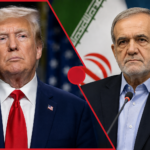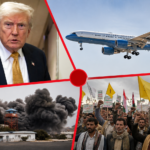










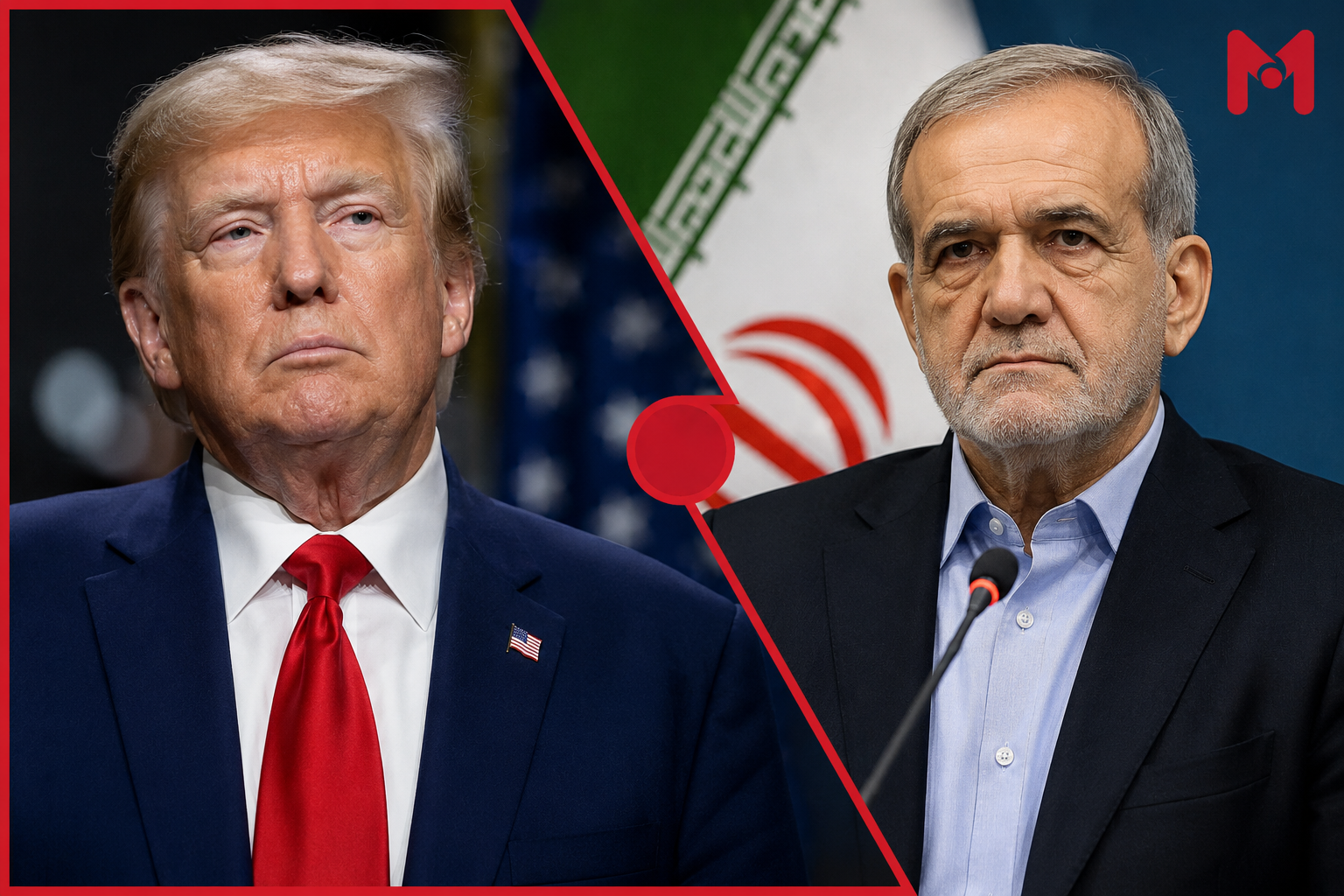

U.S. President Donald Trump has rejected Iran’s demand for compensation over damage caused by U.S. and Israeli bombardment, saying Tehran had not previously raised the issue in negotiations.
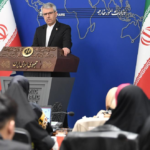
Iranian Foreign Ministry spokesperson Esmail Baghaei said Monday that Iran would not reopen the Strait of Hormuz until the United States meets several conditions, including ending its blockade of Iranian ports, lifting economic sanctions, releasing frozen Iranian assets and paying compensation for war-related damage.
“It is up to the U.S. side to stop and make amends for its illegal and destructive actions,” Baghaei said.
Trump responded by saying he was instead seeking compensation from Iran over Americans killed or seriously wounded in conflicts involving Iranian-backed militants. He also said Iran should compensate families of Iranian protesters who were killed.
“I have instructed my representatives to put this firmly into any, and all, future negotiations,” Trump said.
The Strait of Hormuz remains a major point of international concern. Before the war, roughly one-fifth of the world’s traded oil supplies passed through the strategic waterway, making its continued closure a major factor in energy prices and U.S. political discussions ahead of the November midterm elections.
Iran’s leadership calls for unity
Iranian President Masoud Pezeshkian said the country’s supreme leader, Ayatollah Mojtaba Khamenei, has called for unity as Iran faces economic pressure and sanctions.
Pezeshkian described a nearly seven-hour meeting with Khamenei in an interview broadcast by Iranian state television. They discussed people’s livelihoods, market conditions, employment, housing and problems linked to U.S. sanctions.
Pezeshkian said Khamenei’s main message was the need to prevent internal divisions.
“All of the enemy’s plans are aimed at creating division,” Pezeshkian said. “What we have to do is prevent divisions from emerging.”
It was only the second time Pezeshkian has publicly said he met with Khamenei since the younger Khamenei became Iran’s supreme leader in March following a U.S.-Israeli strike that killed his father. The new supreme leader has not appeared publicly since the attack.
Former Revolutionary Guard commander takes top security role
Iran has appointed Mohsen Rezaei, a military adviser to Khamenei, as head of the country’s Supreme National Security Council.
Rezaei, 71, led Iran’s Islamic Revolutionary Guard Corps from 1981 to 1997, including during the Iran-Iraq War. He recently warned that U.S. forces could face serious risks and casualties if Washington did not lift its blockade of Iranian ports.
He replaces Mohammad Bagher Zolghadr, who is moving to become a political adviser to Khamenei.
The Institute for the Study of War said Rezaei appears prepared to negotiate with Washington while seeking Iran’s maximum objectives, including control of the Strait of Hormuz, but has not indicated what concessions Iran might make.
Israel restricts access to West Bank town
Israel’s military has declared the Christian-majority town of Taybeh in the occupied West Bank a closed military zone.
The measure is intended to prevent Israeli settlers and other non-residents from entering the town following incidents involving arson, vandalism and incursions onto private and village property.
The military said Palestinian residents and journalists would still be permitted to enter unless soldiers determine that their presence presents a threat. Authorities said troops would detain suspects and disperse gatherings when necessary.
The move follows months of difficulties involving Israeli army and police efforts to maintain order across the West Bank. According to the Ramallah-based Palestinian Health Ministry, at least 87 Palestinians have been killed by Israeli settlers or soldiers in 2026.
Houthi attack kills seven in Yemen
An Iran-backed Houthi attack on the Red Sea port town of Mokha on Sunday killed seven people and injured 30, according to Yemen’s Defense Ministry.
The ministry, which operates under Yemen’s internationally recognized government, said four military personnel and three civilians were among those killed.
Fighting continued Monday near the village of Taiz. The Houthis said artillery shelling killed a 13-year-old child and injured another child.
The attack is part of a broader wave of Houthi strikes against positions held by Yemen’s Saudi-backed government since a 2022 truce. Renewed concerns over shipping through the Strait of Hormuz have also increased attention on the Red Sea and the Bab el-Mandeb Strait.