










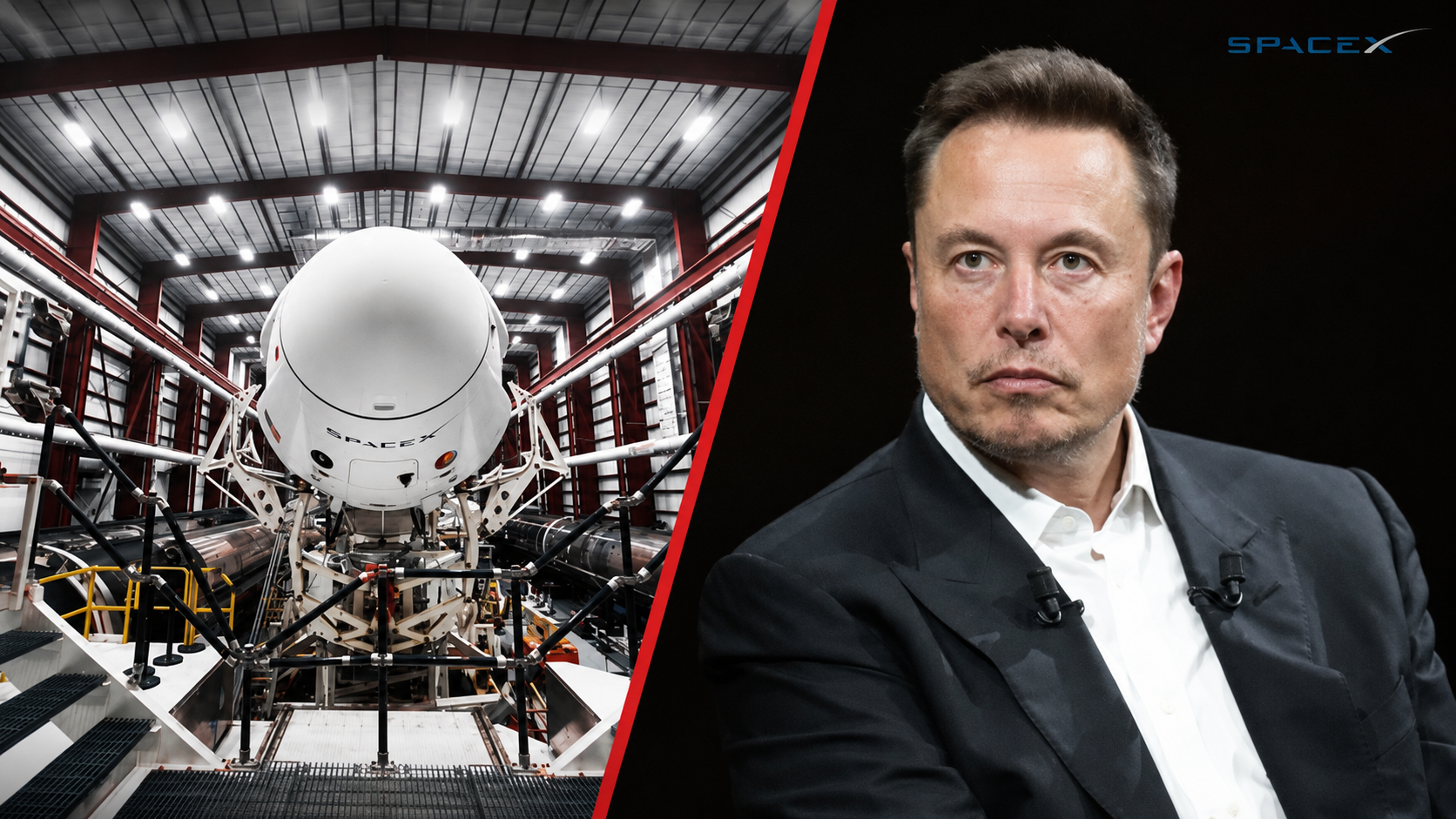

SpaceX shares have fallen 34% from their June 15 record high of $225.64, according to The Motley Fool, raising questions about what could come next for Elon Musk’s space company.
The stock previously climbed above $200 after its reported IPO at $135, reaching a peak valuation of roughly $3 trillion. The company has since seen its shares fall sharply from those highs.
Despite the decline, SpaceX has substantial capital available for expansion. The company reportedly raised $85.7 billion from its IPO and followed that with a $25 billion bond offering.
The Motley Fool argues that SpaceX could follow a strategy similar to the one Musk used to build Tesla into a major global company: first establish profitable businesses, then use the capital, infrastructure and reputation generated by those businesses to fund increasingly ambitious projects.
Starlink, SpaceX’s satellite internet business, is described as already profitable, while the company’s rocket operations could also be profitable when heavy investment in next-generation rockets is excluded.
SpaceX is also investing heavily in artificial intelligence and data-center infrastructure, although that division is currently unprofitable, according to the report.
The company’s longer-term ambitions include lunar robotics manufacturing and eventually building a self-sustaining human settlement on Mars. However, the article argues that these projects are likely to remain long-term goals while SpaceX focuses on expanding businesses such as Starlink, rockets and AI.
The Motley Fool’s analysis suggests investors should look beyond the recent stock decline and consider whether SpaceX can repeat the gradual, capital-intensive growth strategy that helped transform Tesla into a global automotive giant.