









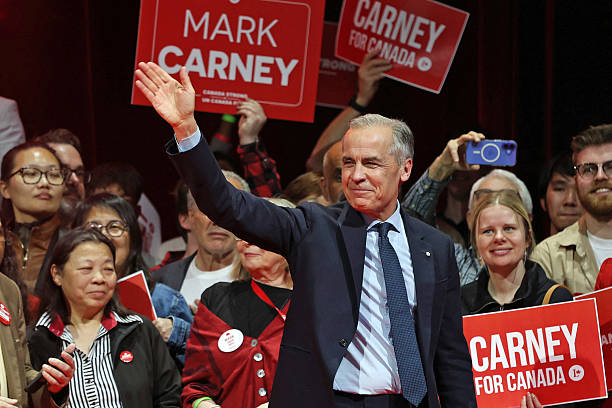

Canada’s premiers are backing Prime Minister Mark Carney’s decision to walk away from a proposed trade agreement with the United States, as the collapse of negotiations pushes the two countries deeper into a trade dispute.
The talks ended after days of negotiations failed to produce an agreement. Carney said Canada was “walking away from a bad deal” rather than accepting terms he believed were not in the country’s interests.
The breakdown came as the United States imposed 50 per cent tariffs on billions of dollars worth of Canadian goods. Canada has said it will respond with tariffs of its own on a dollar-for-dollar basis beginning next month.
Carney briefed Canada’s premiers on Saturday afternoon about the trade agreement he had decided to abandon and the tariff situation.
Ontario Premier Doug Ford was among the strongest voices supporting the decision. Speaking to reporters in Toronto, Ford said Canada needed to respond directly to the U.S. tariffs.
“I’ve always said we need to fight these tariffs. Tariff to tariff, dollar to dollar,” Ford said.
Ford said he was pleased that Carney had not signed the proposed agreement, arguing that it would have been harmful to Ontario and several major parts of the province’s economy.
“I’m glad he didn’t sign that deal because it was a bad deal. It was a bad deal for Ontario. It was a bad deal for the auto sector, the steel sector and the manufacturing sector,” Ford said.
The Ontario premier also argued that Canada had not started the dispute but would now have to respond forcefully.
“We never started this fight, but I can assure you, we’re going to win this fight,” Ford said.
The latest tariffs mark a significant escalation in the trade conflict between the two countries. The United States imposed 50 per cent duties on roughly US$20 billion worth of Canadian goods after the negotiations failed. Canada has announced that its retaliatory measures will begin September 8.
The collapse came after hopes had grown that Ottawa and Washington might reach a deal following several days of negotiations. Instead, the talks stalled, leaving the two governments without an agreement and triggering the new U.S. tariffs.
Carney has said Canada will respond to the American measures “dollar for dollar.” The planned response is expected to target U.S. imports in areas including steel, dairy, appliances, agricultural equipment, pulp and paper and electronics.
Manitoba Premier Wab Kinew also supported taking a tough approach toward Washington.
“History will not be kind to Donald Trump, so we should never appease him,” Kinew said. “We should fight back, which is what Canada’s doing today.”
Nova Scotia Premier Tim Houston likewise said Carney had his full support.
“I continue to stand ready to support and work with the prime minister,” Houston said.
Houston said the situation demonstrated that Canada could no longer depend on its relationship with the United States in the same way it had in the past.
“It’s clear that we cannot trust or rely on the United States as we once did. This reality must make us more determined than ever to make Nova Scotia and Canada stronger,” he said.
The premiers of New Brunswick, British Columbia and Saskatchewan also offered support for Carney’s position, according to Global News.
The dispute is not limited to the immediate tariff measures. The failure of the talks has also raised broader concerns about the future of Canada-U.S. trade relations and the economic pressure that could fall on Canadian industries.
Carney has said the new American tariffs affect a wide range of Canadian products, while Ottawa prepares its own response. Reuters reported that the latest escalation threatens sectors including softwood lumber and wine and could lead to job losses, while Canadian officials have pledged support for industries affected by the dispute.
The U.S. and Canada had appeared to be moving toward an agreement before negotiations broke down. The latest collapse followed disagreements over several issues, including the treatment of Canadian content in automobiles and proposed restrictions affecting Canada’s ability to negotiate trade agreements with other countries.
Carney said the two sides also disagreed over automotive trade, with Washington prepared to make a deal covering cars but not extending the same treatment to medium- and heavy-duty vehicles such as trucks. He also objected to proposed restrictions on future Canadian trade agreements.
The result is a rapidly worsening trade relationship between two countries with deeply connected economies.
For Canada’s premiers, however, the immediate message has been one of support for Ottawa’s decision. While provincial leaders are warning about the potential economic and employment consequences of the tariffs, several are also arguing that Canada should not accept an agreement they believe would leave the country in a weaker position.
The premiers’ response gives Carney broad provincial backing as Ottawa prepares to retaliate against the new U.S. tariffs.
The next major step will come in September, when Canada’s planned dollar-for-dollar measures against U.S. imports are scheduled to take effect.