







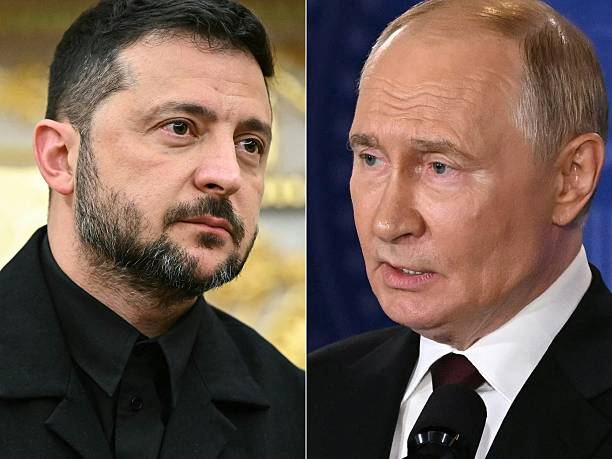

Ukraine, the United States and European partners have developed a new three-step framework aimed at creating a possible path toward ending the war with Russia, according to Ukrainian President Volodymyr Zelenskyy.
The proposed framework would begin with a ceasefire before moving toward troop withdrawals, the creation of a buffer economic zone and broader security arrangements for Ukraine.
However, Russia’s existing demands could make the proposal extremely difficult to implement, with Moscow continuing to seek major territorial concessions from Kyiv.
According to details reported by The Times of London, the first stage of the proposed framework would require an unconditional ceasefire between Russia and Ukraine.
The second stage would involve Ukrainian and Russian forces withdrawing to an equal distance from a designated section of the front line. A temporary “free economic zone” would then be established in the area and administered by a third party.
The final stage would address the future roles of the European Union and NATO, security guarantees for Ukraine and the commitments Kyiv would ultimately be required to sign.
Zelenskyy previously briefed journalists on parts of the proposal, saying negotiations with the American side had narrowed the settlement framework down to three key steps.
Representatives of the United States were involved in the consultations, including Steve Witkoff and Jared Kushner, President Donald Trump’s son-in-law. The proposals are now expected to form the basis for further discussions with Russian representatives.
The first step may also be the most difficult.
The proposal calls for Russia to accept an unconditional ceasefire, but some experts remain skeptical that Moscow would agree to such an arrangement.
The ceasefire challenge
Foreign policy expert Robert Person expressed similar doubts in an October article for the Journal of Democracy titled “How to Negotiate with Putin.”
Person argued that he remained doubtful a Russian-Ukrainian ceasefire agreement would ever reach the point of a formal signing ceremony, let alone develop into a lasting peace agreement.
He wrote that a tougher strategy aimed at reducing Russia’s ability to wage war could instead help Ukraine survive and potentially create the battlefield stalemate needed for a frozen conflict.
Person also argued that Russian President Vladimir Putin has shown little interest in an amicable settlement.
“A negotiating strategy of alternating carrots and sticks might work on a leader who is genuinely looking for a diplomatic exit from war,” Person wrote. “But Vladimir Putin is no such leader.”
He argued that Putin’s actions since the beginning of the latest diplomatic outreach suggested that the Russian president continued to seek what he considers total victory.
“There is no reason to think carrots will now alter his thinking,” Person wrote, warning that Putin could interpret concessions as evidence of weakness or a lack of unity among Ukraine’s Western allies.
What comes next?
The second stage of the proposed framework would establish the so-called free economic zone while requiring Russian and Ukrainian forces to pull back an equal distance from a designated part of the front line.
However, important questions remain unanswered, including who would administer the proposed buffer zone.
The third stage would focus on the broader security structure surrounding any eventual settlement.
That section would address the roles of the European Union and NATO, security guarantees for Ukraine and the final commitments Kyiv would have to make.
Zelenskyy stressed that the framework was not created by Ukraine alone. He said it was developed in cooperation with the United States and European partners, while American officials were also in contact with Moscow.
The Times has described the three proposed actions as the core elements of the framework being considered for ending the war.
But Russia’s position remains a major obstacle.
Moscow continues to demand that Ukrainian forces withdraw from the entire Donbas region and has shown no indication that it is prepared to abandon its broader territorial claims.
Zelenskyy has said the negotiating window remains open, but he does not expect a final settlement for at least another year.
For any agreement to move forward, all parties would need to accept the central elements of the proposed framework.
There are also concerns among some intelligence officials that Russia could deliberately prolong negotiations.
According to National Security Journal, people familiar with Russian hybrid warfare tactics believe Moscow could attempt to extend the process until political candidates begin positioning themselves for the 2028 U.S. presidential election.
One former U.S. intelligence official told the publication that Russia could use the election cycle to create additional leverage for its position.
The proposed peace framework therefore faces a difficult test before formal negotiations can even begin.
Ukraine and its Western partners have outlined a sequence starting with a ceasefire and moving toward troop withdrawals, an economic buffer zone and long-term security commitments.
Russia, meanwhile, continues to demand major territorial concessions from Ukraine.
Whether those positions can be reconciled could determine whether the three-step framework becomes the foundation for serious negotiations—or stalls before a broader peace agreement can take shape.