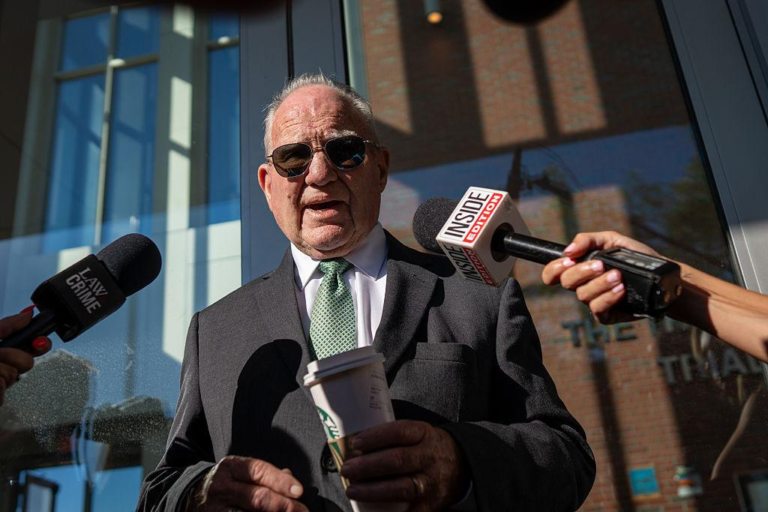








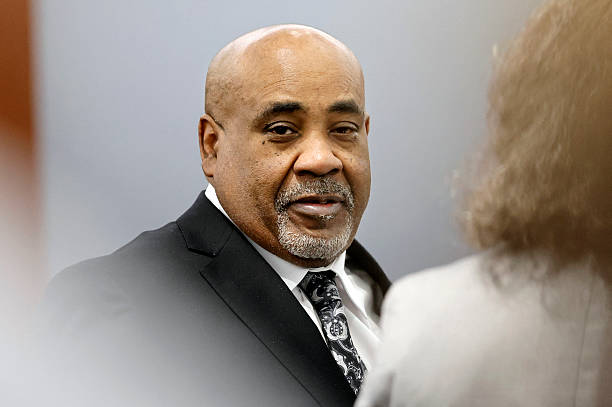

Prosecutors have rested their case against Duane “Keffe D” Davis in the murder trial over the 1996 killing of rapper Tupac Shakur, after presenting jurors with hours of recordings in which Davis discussed his alleged involvement.
Over roughly a week and a half of testimony, prosecutors called 25 witnesses as they sought to establish that Davis was responsible for orchestrating the events that led to Shakur’s fatal shooting in Las Vegas nearly 30 years ago.
A major part of the prosecution’s presentation came not from witnesses describing the shooting, but from Davis himself.
Jurors heard almost eight hours of recordings from four separate interviews conducted in 2008, 2009 and 2017. Prosecutors say the recordings contain accounts from Davis that place him in a vehicle alongside Shakur on the night of September 7, 1996.
The accounts were not completely consistent.
In interviews conducted as part of a 2009 proffer agreement, Davis described handing a gun to people in the back of his vehicle. Prosecutors have argued that statements he later made publicly affected the immunity provided under that agreement. A judge ruled that Davis’ earlier police interviews and statements in his memoir could be used as evidence.
Davis’ version of the night
Davis told investigators that the confrontation began after a fight at the MGM Grand involving his nephew, Orlando Anderson, and members of Death Row Records, including Shakur and Marion “Suge” Knight.
According to Davis’ account, members of his group later drove toward Club 662, owned by Knight, looking for their rivals. They eventually encountered Shakur and Knight while the two vehicles were traveling alongside each other.
Davis said he passed a gun toward the back of his vehicle. In one recording, he recalled telling investigators that Deandre Smith initially rejected the weapon before Anderson took it.
The 2008 interview represented one of the most detailed accounts Davis had given about the night, according to the source material.
Later recordings presented a different tone. In a 2017 interview for a BET documentary, Davis expressed regret over what happened but also denied doing anything to Shakur’s family.
Davis has also offered different versions of what happened immediately before the shooting. In his memoir, he claimed Shakur reached beneath his seat before shots were fired. However, the supplied material notes that Davis did not make that claim during his proffer interviews.
Prosecution faces challenge over physical evidence
Despite the recordings, prosecutors face a significant issue: the lack of physical evidence directly connecting Davis to the shooting.
Neama Rahmani, a former federal prosecutor, told CNN that investigators have been unable to independently corroborate Davis’ statements with DNA, fingerprints or the murder weapon.
He described prosecuting a decades-old case largely around a defendant’s changing statements as difficult and said the lack of independent evidence could make it harder for prosecutors to prove the case beyond a reasonable doubt.
Prosecutors also introduced a 1998 FBI interview in which Davis told an agent that he and Anderson were in Las Vegas on the night of the shooting but returned to their hotel after the earlier fight. Unlike the later interviews, that conversation was not recorded and exists only in a written report.
Witnesses reluctant to testify
The prosecution’s case also included testimony from witnesses who were reluctant to appear voluntarily.
James McDonald, a former security chief at Club 662, Denvonta Lee, a former South Side Crip, and Malcolm Greenidge, a childhood friend of Shakur and member of the Outlawz, were compelled to testify.
Greenidge told the court he was traveling behind the vehicle carrying Shakur and Knight when the shooting occurred. After reaching Shakur, he recalled the rapper warning him to get down because the attackers were going to shoot him.
Former detectives also testified about the difficulties investigators encountered in the years immediately following Shakur’s death.
Brent Becker, a former Las Vegas Metropolitan Police Department detective, said investigators repeatedly traveled to California in an effort to contact people connected to the case but struggled to make progress.
Defense attacks Davis’ credibility
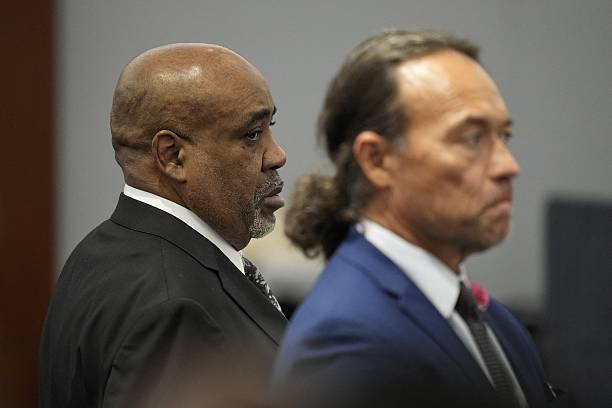
Davis’ attorney, Michael Sanft, has focused heavily on whether his client’s statements can be trusted.
During opening arguments, Sanft questioned what independent evidence existed to support Davis’ various accounts. He also argued that Davis had a reputation for exaggerating and characterized some of his claims as “bullsh*t.”
The defense has also highlighted the nearly three decades that have passed since Shakur was killed, along with questions surrounding the investigation and whether prosecutors can definitively establish that Davis was in Las Vegas that night.
The prosecution, meanwhile, has portrayed Davis as an influential figure within the South Side Compton Crips.
Former Compton police gang-unit officer Robert Ladd testified that Davis was a “shot caller” who could direct younger gang members.
Former LAPD detective Daryn Dupree also testified that Davis volunteered information about Shakur’s killing during an interview that was originally focused on the murder of rapper Christopher Wallace, known as The Notorious B.I.G.
According to Dupree, Davis responded to questions about Wallace by saying, “We did the other one,” which investigators understood to mean Shakur’s murder. Dupree testified that investigators had not asked Davis about Tupac before he made the statement.
Defense case begins
The prosecution rested Wednesday after less than an hour of testimony, clearing the way for Davis’ defense to begin presenting its case.
Sanft said he planned to call two Las Vegas Metropolitan Police Department officers to address questions he believes were left unanswered during the prosecution’s case. He also planned to call another detective who participated in the 2009 interview with Davis.
Sanft said he does not plan to call Marion “Suge” Knight as a witness.
The case now moves to the defense as jurors weigh a prosecution case built substantially around Davis’ own words against the defense argument that those statements are unreliable and insufficiently supported by independent evidence.