









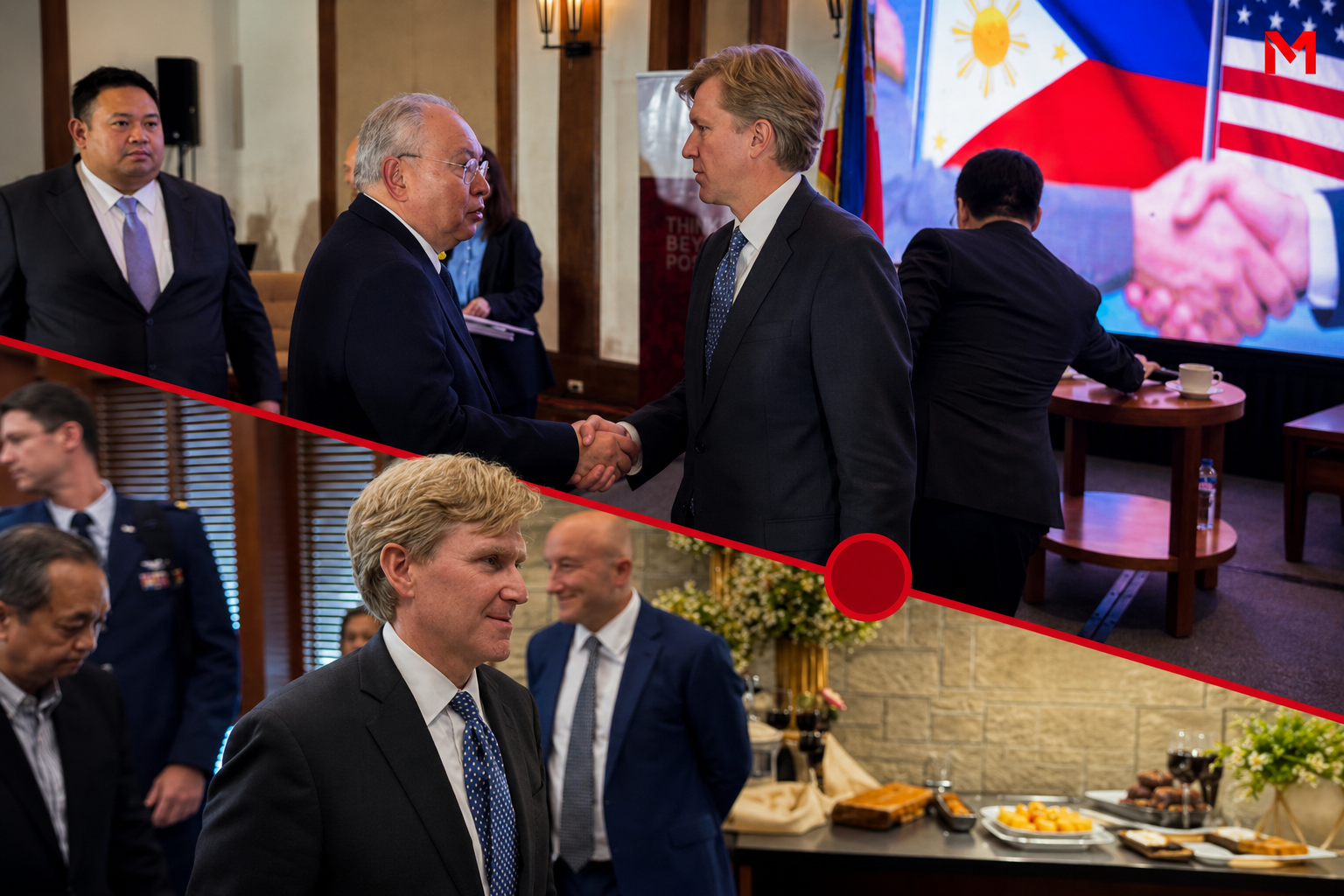

A senior Pentagon official has urged U.S. allies in Asia to increase their defense spending and strengthen their military capabilities to help deter aggression across the region.
Elbridge Colby, the U.S. undersecretary of defense, made the remarks Monday during a forum in the Philippines, his first stop on a Southeast Asian trip that will also take him to Indonesia, Thailand and Cambodia.
Colby stressed that the United States remains committed to Asia despite Washington’s current focus on the war in Iran and the wider Middle East.
“America is definitely not disengaging from Asia,” Colby told an audience that included diplomats, military officials, business leaders and journalists. He said U.S. national interests required Washington to maintain a strong presence in the region.
“We are not leaving; in fact, we are digging in,” Colby said, describing Asia as being of “paramount importance” to the United States.
Allies urged to strengthen their own defenses
Colby said the U.S. wants its Asian allies to take greater responsibility for their own security by modernizing their armed forces and increasing defense investment.
He said the United States wants to maintain combat-capable forces in strategically important areas but argued that regional security cannot depend entirely on American military power.
“This defense architecture cannot rest on American shoulders alone,” Colby said, calling for a network of capable and sovereign nations that can protect their own territory.
He emphasized that Washington’s request for greater defense spending should not be interpreted as abandonment.
“We are looking for partners, not protectorates,” he said.
South China Sea remains a security concern
Colby did not directly repeat some of Washington’s stronger criticism of China’s activities in the region, including its actions in the disputed South China Sea.
China, the Philippines, Vietnam, Malaysia, Brunei and Taiwan have competing claims in the strategically important waterway, which is a major global trade route.
The United States has repeatedly said its defense treaty with the Philippines requires Washington to defend its ally if Filipino forces, ships or aircraft come under armed attack, including in the South China Sea.
Colby also repeated a commitment made by Defense Secretary Pete Hegseth to maintain strong U.S. military capabilities in the Western Pacific in order to deter aggression and make escalation less likely.
He praised the Philippines for strengthening its defense capabilities through regular large-scale military exercises with U.S. forces and cited similar efforts by Thailand, Indonesia and other Southeast Asian partners.