










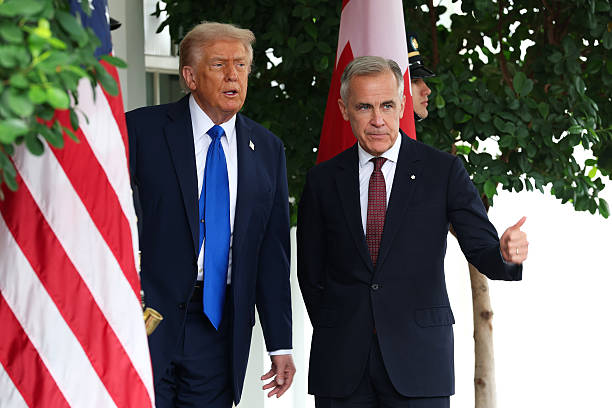

The trade dispute between the United States and Canada has taken a sharp turn, with Canadian Prime Minister Mark Carney accusing the Trump administration of making demands that go beyond tariffs and trade.
Carney said the United States sought changes affecting Canada’s French-language protections, Quebec’s culture and broader Canadian identity as part of negotiations over tariffs. Canadian officials have rejected those demands, arguing that language and cultural protections are fundamental rights.
The dispute has added a major cultural and political dimension to an already escalating trade conflict between the two countries.
The claim that Washington wanted Canada to change its French-language rules and cultural protections has become one of the central issues surrounding the collapse of recent trade negotiations.
Carney said American negotiators viewed French-language rules as an “irritant,” while Canadian officials maintain that protecting French in Quebec is a matter of rights rather than a trade barrier.
The disagreement comes as President Donald Trump has increased pressure on Canada through tariffs and demands for changes to the trading relationship.
The United States has imposed 50% tariffs on a wide range of Canadian products, while Trump has also threatened additional tariffs targeting Canadian automobiles, trucks and auto parts.
The latest confrontation follows the breakdown of U.S.-Canada trade negotiations after weeks of discussions.
Canadian officials have argued that some of the U.S. demands would affect Canada’s ability to protect its own industries, cultural policies and economic interests. Prime Minister Carney has maintained that Canada is prepared to defend its national interests rather than accept an agreement it considers unfair.
The dispute has also produced a strong political reaction inside Canada, particularly in Quebec, where French-language protections are closely tied to the province’s cultural identity.
Quebec Premier Christine Fréchette has backed Carney’s position, while Canadian political leaders have increasingly portrayed the dispute as an issue involving national sovereignty as well as trade.
Trump’s latest tariff pressure has therefore pushed the relationship beyond a conventional disagreement over import duties.
At the center of the dispute is whether trade negotiations should include demands affecting Canada’s domestic policies, including language and cultural protections.
The confrontation could have significant economic consequences for both countries because their economies and supply chains remain deeply connected.
Canada has announced plans for retaliatory tariffs against U.S. goods, with the measures expected to match American tariffs dollar for dollar beginning September 8.
For now, the dispute remains unresolved, with Washington and Ottawa taking increasingly hard positions.
What began as a fight over tariffs and market access has now become a much broader confrontation over trade, economic policy, national sovereignty and Canada’s cultural identity.
Important editorial note: The claim that Trump personally demanded Canada “change its French language, Quebec culture and Canadian identity” should be attributed to Carney rather than presented as an independently established direct quote from Trump. Current reporting confirms Carney made the allegation, while a U.S. trade official disputed that language was itself a negotiating issue.